The Art of Smell

I always keep an eye out for any interesting articles or posts about scent and the sense of smell. According to many scientific studies, smells have a greater power to evoke memory than our other senses. We cannot underestimate the importance of the sense of smell. It can take us back to different times, uplift, relax or in some cases tell us something is very wrong or even dangerous. My ex-flat mate had health problems that meant she regularly lost her sense of smell and at the same take also loss her appetite. I mentioned Smeller in a previous blog, but I want to tell you more about this, as I found it very interesting and hopefully you will too.

In 1902, the German-Japanese poet and art critic Sadakichi Hartmann staged A Trip to Japan in Sixteen Minutes, the world’s first ever scent-performance in New York. The idea was to create a work of art that appealed to his audience’s sense of smell and to evoke a journey. He claimed, there had been no apparatus before that could provide an audience with what he called a melody in odours. The performance was, however a disaster. The influx of heavy, floral perfumes was intended to evoke different countries on a journey by sea to the East, but the crowd, with only the visuals of Hartmann and two powdered women in kimonos sliding smell-soaked fabrics in front of a fan, were not impressed and Hartmann was heckled off stage after a few minutes.

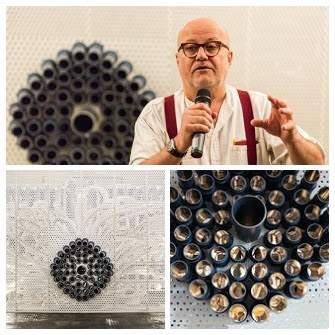
Now, fast-forwarding, more than 100 years later, Hartmann would have been astonished to witness the Smeller 2.0 at Berlin’s Martin-Gropius Bau museum. This temporary installation of a machine that pumps smells one after another into a room, was debuted in 2012 and has since been exhibited in different venues.  Wolfgang Georgsdorf, the artist, wants us to think about smell as an artistic experience and invented a machine called the Smeller 2.0. Closely resembling a pipe organ with its tangle of pipes and vents, it is the size of a small coffee shop, like a huge air conditioning unit. Its 64 chambers can each be loaded with a different scent, which can then be played like a musical note by the artist using a midi keyboard and digital-to-analog converters to turn electrical impulses into physical movements in the instrument.

According to other artists in the smell art community, the Smeller does what no one else in the intervening time period has ever managed to do: it pumps a series of defined, distinct smells into the room, one after the next. There are no sounds and no visuals. The scents dissipate just as the next one arrives, every inhalation a new surprise, it could be horse or a strong cheese. Georgsdorf, has spent more than 20 years getting his Smeller in front of an odience, which is what he calls those who experience it. He made the first prototype in 1996, but the idea has been in his head for almost his entire life. His first notable olfactory experiences as a child of four or five.

Georgsdorf researched into the previous attempts at creating a kinetic smell instrument. “What I saw was a series of very entertaining, triumphant failures,” he said. Sadakichi Hartmann’s electric fan was only the beginning of the 20th century’s experiments in olfactory performance. In 1906, before movie theatres even began to use sound, a newsreel of the annual Rose Parade in Pasadena, was shown in a theatre in Pennsylvania, with electric fans blowing the scent of the flower through huge cotton pads into the audience. There were several further efforts to pump different scents into theatres to correspond with a movie’s plot. The most famous example of this cinema-olfaction hybrid was Hans Laube’s Smell-O-Vision, which debuted with the film The Scent of Mystery in 1960. In specially-equipped theatres, 30 different odours were dispersed from audience members’ seats when triggered by the reel. Shortly before a similar technology, Aromarama, which used a cinema’s air conditioning system to diffuse odours into a theatre, was introduced. Neither one was successful. The New York Times called Aromarama a stunt and its odour sequences elusive.

More pungent neologisms followed: John Waters film Polyester in 1981 came with a scratch and sniff card entitled Odorama, containing scents like air freshener, skunk and pizza, that corresponded to numbers flashed on screen. Later copied by Nickelodeon under the moniker Aromascope. In 1999, the iSmell, a kind of shark-fin shaped USB drive with an air freshener attached, tried to offer consumers scents triggered by their internet browsers. Despite heavy investment, once more, these were to fail.

Georgsdorf comments that:

People have misunderstood on a physical level, a chemical level, on a perceptive level, and on a psychological level. The comparison with visual and audio performance has caused confusion. We are talking here about a new form of art that does not deal with waves such as light and sound, but with particles, and particles, unlike waves, don’t just cease to exist when a stimulus stops producing them. They linger.

The key question is, how does this relate to Art? Scientists are still figuring out the intricacies of how our brains decipher scents.  However, evidence suggests that the olfactory data is more deeply connected with memories than language, so is much more emotional. This makes scents difficult to talk about. We most often talk about the source of the smell, rather than the smell itself: something might smell like the pages of an old book for example. Scientists and artists have much in common, and perfumers are a mix of both.

He acknowledges that some of the difficulty lies in the artform itself. “We have 4,000 years of music history and we have zero thousand years of Osmodrama history, the vision is a new form of art that had never existed because simply the technology was not there”

For now, Georgsdorf has resisted mass-market ambitions. He seemed particularly irritated by the “wishful thinking” of the failed iSmell. But his work isn’t only about making smells into art. He is currently working on research with the University of Dresden and University Hospital in Berlin to test whether subjects with depression see an improvement in their symptoms after experiencing the distinct series of scents from the Smeller. Preliminary results suggest they do.

It’s not a gimmick, what started as a wacky experiment many years ago has been turned into a successful art installation. In the future it may feature more widely in our life’s. I am very interested to see where this leads, as many of the everyday items we use today would have been unimaginable to our ancestors. Some time in the future we could even have a home version of the Smeller!

The Great British Bake-Off

I heard some great news today. On Tuesday the 22nd of September its the return of the Great British Bake-off, complete with a new line-up. The wonderful Sandi Toksvig (like the equally wonderful Mary Berry) will be sadly missed. I am not a fan of reality TV, but once in a while something slips through the rubbish that is actually worth watching like; The British Sewing Bee, Painter of the Year and The Great British Bake- off. Anything that shows you a new skill is always good to watch and talk about!

Home- baking featured heavily in Lock-down 2020, flour was like gold dust as baking was seen as a great way of passing the time. Children learnt to bake with their parents, as I did as a child. The extra pounds gained from eating all these lovely sugar-filled treats was not so good. Now we are all have to eat less and exercise more to get back in shape, but it was worth it. My niece loves baking but takes what she makes into her workplace rather than eating it herself, much kinder to her waistline. Making her very popular with her colleagues too.

Before the Great British Bake-Off came to our screens. Home- Baking was seen as the domain of the WI, garden fetes and Grand-mothers. Now it’s for everyone and the marketplace is full of trendy, creative, youthful bakers, male and female. Even Waterstones has shelves full of baking books.

First aired on BBC Two on the 17th of August 2010, GBBO as it’s known as was an instant hit. I’ve become completely addicted. Whether it’s learning about the intricacies of the perfect pie crust, obsessing about soggy bottoms or lusting after the delicious cakes.

If you haven’t come across it before; the general idea is that ten home bakers take part in a bake-off to test every aspect of their skills as they battle to be crowned the Great British Bake Off’s best amateur baker. The series follows the trials and tribulations of the competitors, young and old, from every background and corner of Britain. They’re home cooks with a sense of humility and fun making them very likeable and watchable. Many past contestants have gone on to appear on their own series and produce books. Each week the bakers tackle a different baking skill. Cake-baking, pastry, bread-making and patisserie skills are all shown, ending with a showstopper which is the most creative. The tasks becoming progressively more difficult. Sometimes the results are successful and at times a total disaster. With lots of laughter and tears along the way. In a world where everyone wanting to be the best, it’s refreshing to see a group of people who genuinely cheer each other on. There’s a real sense of community and friendship, that does not feel forced. The spirit of kindness and niceness runs through the program. It’s no small thing in today’s world to be kind. But if a bunch of home bakers can bond over biscuits, it makes me feel like perhaps the rest of us can show a bit more kindness too.

It’s almost echoing back to a different era of tea parties, picnics and nostalgic Britain. Aprons, bunting and marques have all had a fashionable comeback. Home- made is seen as special and not more inferior than shop bought. Even the pretty hand-draw pictures that are used on GBBO have a special, unique character. I think that its a good thing to be nostalgic at times, particularly in such an era of uncertainty, anxiety and upheaval. Anything that makes you smile or reminisce about easier times can be uplifting. It’s not about looking backwards rather than forwards, but maybe some accepts of the past are worth returning to; making more ourselves, been happier with less, community, finding pleasure in simple things and teaching our younger generation to be able to make things etc. As I mentioned in my previous blog, statistics have shown we are less content now than in the 1950’s. It’s unrealistic to go back 60 years, but surely its worth considering why these were happier times and what can we learn. So as to change for the better. Happy Baking.

Perfume as an Art Form-Escentric Molecules

As you may have realized I do prefer natural things where possible, but at the same time its only fair to keep an open mind to new creative developments. Many Perfumers have struggled with the IFRA (The International Fragrance Association) which has banned many common ingredients in perfumery. Which has brought new challenges to the industry when a material is forbidden or restricted, sometimes for good reasons like health issues. Unfortunately, the most interesting ones are being cut out, so alternatives are having to be found and often this means developing a replacement in a laboratory.

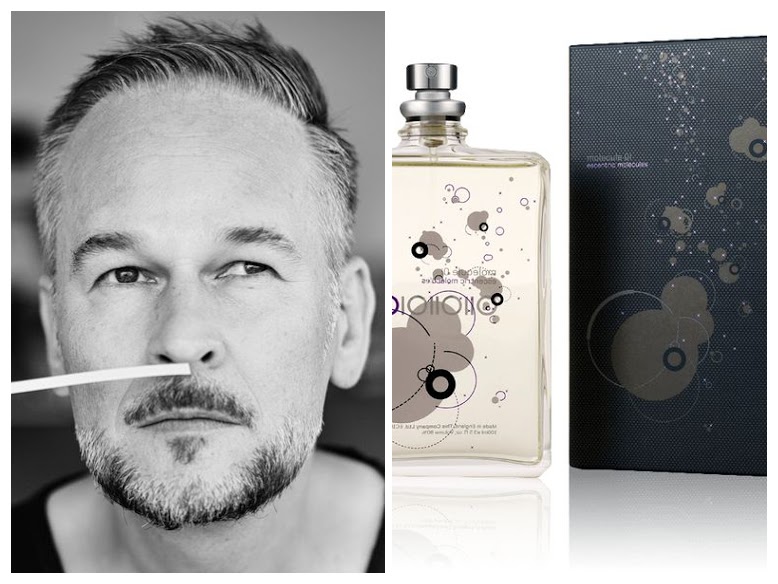
One of the most creative Perfumers around is Gaza Scohen, his company, Escentric Molecules celebrates perfumery as the art of chemistry. It was in London, in 2006, that he launched Escentric Molecules, often described as the ‘anti-fragrance fragrance brand’. He started this as a niche brand never really thinking that this revolutionary fragrance would become so successful. Confounding his expectations to become a huge success.

What is it exactly? An aroma- molecule is something that does not exist in nature. Unknown outside the world of perfumery, (until the launch of Escentric Molecules) Iso E Super was created in a laboratory at IFF in 1973. It had been used in relatively low concentrations in the background of many fragrances for both men and women. Among perfumers, it is prized for its velvety, cocooning effect.

I realised that the common denominator in all the fragrances I liked was that they contained a large dose of it. Iso E Super is highly unusual. You can never get enough of it, it’s like a drug – Geza Schoen

After perfumer Geza Schoen first smelt Iso E Super, he began to experiment, creating fragrances that contained Iso E Super in unheard-of proportions even spraying nothing but the aroma-molecule itself. The molecules hover close to the skin so perfumes bond with the receptors in the olfactory system. The effects were immediate and he decided to create two fragrances which were radically minimalist. The fragrances are presented in binary pairs. Each pair explores one aroma-molecule in two different ways. One fragrance would contain an unprecedented 65% of the molecule. The rest of the formula would consist of ingredients designed to underscore its low-lit mood. This was a brave move; the second fragrance was totally non-conformist. It would contain only the molecule Iso E Super.

“I thought, this one will appeal only to the artists, the freaks, the outsiders.”

From its launch in 2006, Escentric Molecules was a phenomenon hit. Schoen followed the first pair of fragrances, 01, with 02, 03, 04, and in 2020, a fifth pair, Escentric Molecules 05. Each pair focuses on those rare aroma-molecules that have the radiance and depth of character to stand alone. The Escentric and Molecule fragrances in each series are sold separately. These don’t come cheap. But the fragrance smells different on every wearer, so it is cheaper than a bespoke scent.

Throughout his career Schoen has collaborated on conceptual projects such as Paper Passion, a fragrance with Steidl, Wallpaper and Karl Lagerfeld and worked with artists such as Wolfgang Georgsdorf, for whom he made 64 odours for Smeller, an olfactory organ that spectators can play like a piano to make aromascapes. Artist Wolfgang Georgsdorf wants us to think about smell as an artistic experience. (I will feature this in a separate post)

Geza Schoen, appears to be a reserved, modest man. He thinks a woman ‘s mind is sexier than her looks, values the dying art of face to face communication, has a deep-rooted love of natural ingredients and thinks most new “niche” perfumes are silly. I couldn’t agree more. He has brought something very different to an industry over-filled with much of the same. Not everyone wants to smell the same as everyone else. What he is creating is futuristic perfumery. It will be interesting to see if other companies follow his lead and how the coming decades with the rising costs and scarcity of natural ingredients will force more perfume houses into laboratories. As a perfumer he is both an artist and skilled craftsman. It would appear that perfumery is a combination of both skill and intuition. I am curious to see what he does next…..

Post- Coronavirus Consumerism

Now as a retailer, consumerism keeps me in work. Whilst, I think that quite a lot has been wrong on the high street for some time its important to still have a high street, for numerous reasons.

It has been estimated the country will have a £337 billion deceit this year. Which is 6 times more than the chancellor predicted in March. The majority of our economy is created by people spending money. Which is something until recently we have all been doing a lot, myself included. Children had to have the latest trainers, we all had to update our phones for the newer version. I had been having difficulties with my phone when I returned to the large phone company, I had purchased it from they told me my four-month-old Samsung phone was old, so it was not surprising it didn’t work. When did items still under guarantee become old? Years ago, you bought when you needed to replace an item that no longer worked not because you had to have the latest version.

We have been spending more for lots of reasons, but rarely because we actually needed something. Often, we buy clothing or goods that are “just okay” for no reason at all. Instant gratification and items buying for the sake of was the normal. Our ancestors saved up to buy and valued for many years the items they bought. I am sure they would be amazed by modern consumerism.

However, times are changing: job uncertainly, lose of earning, fear and caution have changed the high street. Some shops on opening, post-lock down had a flood of returning customers but many didn’t and the rush didn’t last long. A recent Instagram poll suggests that 67% of consumers are shopping less on the high street. On-line business had increased, but many companies had problems delivering and fulfilling the larger quantity of orders. So, buying online is not proving to be a 100% successful.

Now our spending was curtailed for several months, when shops, restaurants and pubs closed their doors temporarily. We couldn’t go out to shop, now shops have re-opened with restrictions in place, its not quite the same. Garments can’t be tried on; browsing is unfair when there is a queue outside waiting to come in. Prices in some cases have been slashed but in some sectors of the high street prices have risen. I think people have fallen out of love with shopping a little, having realised they didn’t actually miss shopping on the high street. Retailers will have to be inventive to coax shoppers back.

The larger high-street stores have been selling goods for less and less, usually by using 3rd world labour. But we are becoming aware of the human costs of having cheap clothes and the huge problem of land- fill with all our unwanted goods. Its been too easy to buy three items rather than just one. We have become a throw-away society. How we still consume but consider these factors is an important question.

In the 1950’s when we consumed less people were happier, so spending more didn’t make us happy. The lock-down was a wake- up call for us. Many big names are disappearing from the high street, although I would say that most of these were no surprise as problems had existed pre-lock down. Its awful that many people are losing their jobs and many more will most likely follow as businesses come out of furlough. The High street stopped listening to its customers a long time ago. Companies like Marks and Spencer’s have stopped making popular items to try to appeal to trendy, young customers disregarding the needs of their actual customers and wonder why profits are down! I hope than common -sense will out and they start making the right decisions.

I have always been a fan of smaller independent businesses; trade has been challenging for them. The constant price cuts and permanent sales have made it difficult to compete on a level playing field, with the high street. But customer service, passion, commitment and giving extra to their customers is what retail in the 2020’s should be about. These businesses implement customer- led changes quickly and are aware of packaging and the issues of sustainability. They may just be able to save the high street for us all.

The Effects of Coronavirus- Good and Bad

Six months on, whilst I truly hope the worse effects of coronavirus are over and that some sense of normal life can return. It has to be said that life may never be quite the same as before. Now, I’m asking about the effects of the virus on our life’s both, good and bad. Now I realise that for many people it does seem all bad. With job cuts, worries about future loss of work and businesses closing, there is much too worry about. But I always feel that from bad situations some good must come too.

This was such a huge wake-up call for us all. Having to stay in our homes with our partners and families for months was a challenge, as was not shopping or going out. But how many of us, have become closer to our loved ones, having spent more time with them. Parents tried home-schooling and many of us had a go at new and old hobbies. Rather than just watching The Great British Bake-off we actually started baking ourselves. And to help us keep active Mr Motivator came out of retirement and back on TV to keep us moving. Joe Wicks kept your children active and let’s face it, cheered up a few mothers too. Gardening, decorating and all those unfinished tasks were finally done. We all got to meet up with family and friends via Zoom or Messager. My family has been having weekly quizzes on Zoom, which has been fun as well as educational. Puzzles, jigsaws and reading became cool again.

Oddly enough despite the restrictions many of us ate a healthier diet and got more exercise. Families cooked and ate together. Younger generations were forced to stay in and actually interact with their families. We found ourselves time rich rather than time poor. Socializing outside the home ceased. We have been forced to spend less, travel was impossible and we mostly could only spend on food. Its been a time to reconsider what is essential, to reappraise life and decide if we needed to spend as much as we did? Are we living to work or working to life?

Some industries were able to adapt to home-working and this may become a more flexible way for people to work in the future which may benefit working mothers and reduce long commutes to work. We have seen how different ways to work can succeed. Even our Queen has been using Zoom. Unable to source goods from China, British factories produced what was needed. Will we continue to manufacture our own goods instead of importing?

Communities have come together to help those less fortunate than themselves. Many have volunteered, or shopped for those that couldn’t leave their homes or have helped to make extra uniforms and masks for our hospitals. Businesses, both local and national have donated to the health service and to those that needed the help most. Despite the restrictions incredible individuals still continued to raise valuable funds for charities. Our wonderful National Health service has been honoured every week when whole streets around the country came out of their homes to clap for them together.

I do hope that the renewed sense of community can continue as this will surely aid our recovery.

Now for the bad, the stock piling of food and essential cleaning products was shocking, particularly at the beginning of the pandemic. I had to go to eight different supermarkets to find cleaning products to clean my shop, whist it was open for business and as the shelves were all empty I had to take my own cleaning products to work. Essential workers like nurses and doctors were unable to get food for themselves and their families, the older members of the population also had to go without because of stockpiling which was a downright disgrace. Particularly as this only happened in the UK and not in other countries.

Over-eating, drinking too much, over sleeping and spending too much time gaming or watching TV and not getting exercise at all was the new normal for some. My heart does go out to anyone having to go into isolation on their own or to anyone who found the situation caused great anxiety, fear and depression. I do hope than this has now improved a little for you.

Moving on, slowly things are returning if not to normality then to the new normal. Perhaps our values have changed, we can see what is more important to us. Many lost loved ones. The most precious thing of all is to spend time with the ones we love.

The virus lockdown has suspended life and in the return to our everyday life’s have we been through too much to return to our old habits?

Brain Power As You Age

I love the idea of living a long life, but it has to be with a good degree of health and fitness and an active brain. Now, unless I have a fairy godmother, that I know nothing about the only way this is going to happen is with a fair amount of effort on my part. I have been amazed at all the incredible folk in their eighties, nineties and even over a hundred like the inspirational Sir Tom, who have appearing recently up on various TV programmes. These are the generations that have survived war-time, recessions, national strikes and quite a few ups and downs, but their strength, resilience and good humour still shows through.

Now we know that our brain’s volume gradually shrinks as you get older. When this occurs, some of the nerve cells in your brain can shrink or lose connections with other nerve cells. Blood flow within your brain also slows as you age. These age-related changes are thought to be behind the differences in cognitive function many people notice as they age. However, myths about ageing can contribute to a failing memory. Middle-aged and older learners do worse on memory tasks when they’re exposed to negative stereotypes about an ageing memory and better when given positive messages about memory preservation into old age. Therefore, if you believe you can improve your brainpower and put this into practice, you have a much better chance of keeping your mind sharp. My seventy-six-year-old mother has just starting learning Spanish on Duolingo and after 3 days was at the top of the leader board, so age is no obstacle to learning a new skill.

A higher level of education is associated with better mental functioning in old age. Experts think that advanced education may help keep memory strong by getting a person into the habit of being and staying mentally active. Challenging your brain with mental exercise is believed to activate processes that help maintain individual brain cells and stimulate communication among them. Work can keep us mentally active and when you retire pursuing a hobby or learning a new skill can help maintain brain power. The belief that exercising our brains through mentally stimulating activities like puzzles, makes a lot of sense, if we want our brain to stay in peak condition, we should always use it. Other activities like; reading, playing chess or bridge, writing, learning a language, art and music not only stimulate the brain but keep life interesting and worthwhile. My neighbour who is in her late nineties plays bridge daily and is as bright and alert as she was decades ago.

My family throughout the lock-down has had a weekly quiz night on Zoom which we all love and hopefully will continue. Jigsaws and board games have been taken out of the loft and families across the country have been playing these together. If we all kept doing this and not spending hours on social media and mindless gaming, we would notice the difference.

Studies of cognitive ageing often ask people in older age to complete tests of their thinking skills and provide details about activities they do. Almost all of those studies find that the people who carry out much more stimulating mental activities have better thinking skills in older age.

There has been a growing market for so-called brain- training products. These are often computer-based games or tasks specifically designed to be mentally stimulating. These products are popular but there is controversy over whether brain- training really does protect thinking skills in later life. A group of leading research experts has argued that evidence that brain training can help combat cognitive decline as we grow older is limited. Their view was that people who play these games get better at them but might not see improvements in their thinking skills more broadly. One of the biggest companies selling these products was fined in 2016, by the US government Federal Trade Commission for making claims that weren’t supported by evidence and that in the Commission’s words;

Preyed on consumers fears about age-related cognitive decline.

Personality I think that although the evidence on the benefits is still incomplete, there are many great reasons for taking up new activities in later life. Doing hobbies and activities that we enjoy are important to maintaining a good quality of life and well-being in older age. I would mention that you don’t necessarily need to spend a lot of money, the internet provides free quizzes etc and you may be able to join classes at a reduced rate or even for free. Mixing with a younger age group is important and staying engaged and interested in the world around you can help to keep your minds sharp. I have been learning three languages online. It’s challenging at times but also rewarding, great fun and free.

There is promising research that indicates that taking the following steps may help preserve your memory and thinking skills as you age: controlling cholesterol and blood pressure, not smoking or drinking excessively, exercising regularly, eating a healthy diet, getting a good education, stimulating your brain, socializing and staying active in old age.

A new study suggests that in fact, older people who were physically active kept their minds sharper as well as having better health. I thing all these steps are achievable for us all. Now I am middle-aged, I realise just how important it is to be healthy both physically and mentally. No amount of success or wealth matters if we are not in good health and cannot still do tasks or have the ability to think.

So just by making some simple changes now can affect the quality of life in your later years….

Sustainable, Ethical and Fair-Trade Fashion Brands Making a Difference

The latest fashion trend to hit the catwalk isn’t a seasonal colour or a must-have style, it’s the concept of sustainable fashion and ethical clothing and it’s actually not that new either. This has been happening quietly in the background for some time and is only just going mainstream. Many different brands have been focusing on combating various issues in the fashion industry. As I said in my last blog post, this will not happen overnight but as Safia Minney says if we all bought only one piece of ethical clothing, life’s all over the world would be transformed.

Finding fair trade and ethical companies is not always easy, which can sometimes be a deterrent in shifting your buying habits, but companies like Good On You and Buy Me Once are making it easier. The positive impact of spending time researching what you are buying can have on the environment and third world communities is absolutely worth it. There was a time when sustainable clothing would conjure up images of unflattering and suspiciously scratchy styles. Thankfully, there are now a wide number of fashion brands that are changing that perception.

In addition to its implications for the environment and ethical practices surrounding the production of garments, one of the major benefits to purchasing ethical, sustainable, and fair-trade clothing is that it is almost always of a higher quality. This means garments last longer, and when they do show signs of wear, companies encourage you to repair, rather than replacing it. Some businesses even recycle clothing. I send my old cashmere sweaters to a UK company who use the yarn to make new products.

One of the leading lights in ethical clothing is Safia Minney, with her company People Tree. A pioneer in sustainable fair-trade fashion, her story started in 1991. The core mission has stayed the same over the past three decades since award-winning social entrepreneur Safia Minney founded the company. Every product is made to the highest ethical and environmental standards from start to finish, yet the ranges are still contemporary, versatile, affordable and look great while respecting people and the planet. The fashion collections feature organic cotton, Lyocell and responsible wool and are made using traditional artisan skills such as hand weaving, hand knitting, hand embroidery and hand block printing. Employment is created in rural areas where work is often scarce. All clothes are dyed using low impact dyes so are free from harmful azo chemicals which are frequently used in clothing manufacture. Natural materials are used where possible, avoiding plastic and toxic substances.

When Safia ordered a Tradicraft mail-order catalogue herself to buy fair-trade clothing, she realised how much power her money had when you shopped ethically. Like many people she felt that fair-trade shopping at times, conjured up images of macrame potholders and soapstone elephants. Recognising that: most people were happy to buy something that was fair-trade as long as it looked good, they don’t want shoddy goods.  If she was going to offer a lifeline to Third world artisans their products had to be saleable and that meant stylish. Whilst living in Japan, she published an organic directory, which evolved into a catalogue. Sourcing not just from other fair-trade organisations but actually dealing directly with the producers; weavers, dyers, jewellers and other craftspeople. By dealing directly, more money could go back into the community as there were no middle-men, like importers. Their first fashion range in 2006 met the Global Organic Textile Standard certified by the Soil Association and People Tree was also the first fashion company to be awarded the World Fair Trade Organisation product label. These certifications guarantee their dedication and compliance to the principles of fair trade, covering fair wages, good working conditions, transparency, environmental best practices and gender equality. This UK brand sells everything you need for your wardrobe from tops and dresses to underwear, sleepwear and active-wear.           http://www.peopletree.co.uk

Now, there is a distinction between ethical and fair-trade clothing. Fair-trade fashion must be certified, and specifically focuses on the compensation for workers and farmers associated with its production, while ethical fashion aims to reduce the negative impact on the environment. But I think that both are about sustainable clothing and about the money we spend been for the greater good.

The Patagonia clothing company is definitely setting the bar very high for other outdoor clothing manufacturers. Patagonia, allow you to re-cycle in store and provide guides for repairing and caring for other items. All of the cotton garments from this brand are certified organic by GOTS, so you know the entire manufacturing process follows organic guidelines. They’re also fair-trade certified. The clothes themselves are mostly comfortable, simple ever-day staples for men, women and children. Their website has a lot of great content and information.    eu.patagonia.com

Now, some very well-known names have started to join the movement for ethical and sustainable fashion. One of the biggest names in fashion is Ralph Lauren. This is a great example of a large brand making a simple change, yet it has the ability to make a significant impact on the environment because of its sales volume. The Earth Polo, also available in men’s and children’s variations, is made of recycled water bottles and uses dyes that don’t require water in the application process. Even though it’s just a shirt, Polo Ralph Lauren estimates that it will save the equivalent of 170 million plastic bottles from landfills by 2025.

One of my favourite designer companies is New York-based brand Theory. They have been committed to sustainability since the launch of its Good Initiative in 2017. Theory for Good spotlights the supply chain with the brand’s aim to make us, the customers, aware of where our clothing comes from and whose skills contribute to making our clothing. Originally focusing on wool sourced responsibly in Tasmania and South America and linen consciously crafted in Italy. The brand has now upped its sustainable credentials with Good Cotton, a newly launched capsule collection.

One of the UK’s most successful knitwear companies is Pringle.  For over two centuries this brand has embraced the traditional, the innovative and the unexpected. They have been using recycled fibres to creating limited- edition jumpers. This knitwear shows a commitment to the environment in more than one way as it featuring a graphic earth print and the word Re-Loved. No new raw materials were used in the production of the two jumpers made with 100% recycled fibres even the garment tags are recycled. Whilst not cheap, you can count on the brand’s knits to stay in style and the quality to last for years so consider these sweaters a long-term investment.

Now, these are all high- priced brands, but high-street brands and stores are still making changes. The fashion chain H&M has a Conscious collection, in which each item in the range has an aspect that lessens its environmental impact, like been made of organic cotton or recycled polyester. The prices start quite low so you don’t have to spend a fortune on sustainable fashion. I have bought items myself from this range and was impressed by the quality too. You can also recycle your unwanted clothing at H&M stores for a discount, even if it’s torn up and can’t be re-worn, the brand makes sure the clothes are used for something else and won’t end up in a landfill.

If you prefer to shop by mail-order, British brand- Boden is sustainable. The company, which was founded more than 25 years ago, is renowned for its clothing collections which are both ethical and expansive. Customers locally and abroad can shop for the whole family, as the brand offers expedited worldwide shipping options for its sustainable and affordable clothing for adults, children and babies. The clothes are shipped in recycled and recyclable packaging too.

We can try and make our wardrobes more planet-friendly in non-shopping ways by organising clothes swaps with friends, which could also be a fun way to spend an evening. There are also a number of high street initiatives that allow us to recycle our well-loved clothes when we no longer need them.

If we can direct our conscious spending towards clothing habits that make us feel and look good, without breaking the bank but also can contribute to others then we are all playing our part in the larger scheme of things. Remember as consumers you do have the power to change the way goods are made!

Sustainable and Ethical Fashion- Just Another Trend?

Even before COVID-19, fashion insiders were claiming that the fashion system was broken and had been for some time. The sheer speed of the fashion circle, heavy discounting, ethical problems and environmental issues had bought it to its knees. The fashion industry, causes more pollution than international flights and maritime combined. According to WRAP (waste and resources action programme) every year 350,00 tonnes of used clothing ends up in landfill. High-street fashion, is coming under more and more scrutiny. Shoppers are becoming more considered in their approach, now they know about the far greater costs of cheap labour, poor working conditions and the damage to the environment. More and more consumers want to become sustainable. However, the clothing industry is now the most unsustainable that it has ever been. For the health of the planet does this have to change once and for all?

Sustainable fashion is the movement and process of fostering change to the fashion industry and towards greater ecological integrity and social justice. Concerning more than just addressing fashion textiles or garments. It comprises of addressing the whole infrastructure of fashion. While fast fashion describes clothing that is cheaply made and intended for short-term use, sustainable or ethical fashion is the pole opposite and is sometimes referred to as slow fashion. This takes into account the full life-cycle of the product from the design, sourcing and production processes. looking at everyone and everything it affects such as; the environment, the workers, their communities and even the consumer.

The textiles industry is wreaking havoc on the environment between the processes to make clothing and the waste when it gets thrown away. Both brands and consumers have been taking a much-needed interest in improving these issues. And while there’s no such thing as Eco-friendly clothing as all garments have at least some negative impact on the environment, there are brands, some very well- known, working diligently to help make a difference.  It’s a complex issue and there isn’t one brand on the market that’s currently capable of tackling everything on its own. I will write about some of these in my next blog.

There are five main issues being addressed in the fashion industry:

Water usage: The demands for fresh water for drinking and agriculture is far surpassing what’s available. As a result, some brands are now looking at their supply chains to see how they can cut back on how much water they’re using.

Hazardous chemicals: Dyes and finishes from the production processes are dangerous for the workers, and can pollute community water sources. These chemicals may not affect the consumers, but they can be a problem for the workers and the people who live in the same areas as the factories. Fashion brands are now tasked with coming up with new ways to address the damage caused by dyes and finishes.

Short lifecycle: Stores are constantly launching new designs and consumers are regularly updating their wardrobes. The biggest goal in sustainable fashion is to buy less, use things for longer and to make clothes last. Second-hand, used clothing is been promoted. Buying something used is more sustainable than anything new, so it’s automatically going to cost you less. The fashion industry calls it recommence and its totally on-trend.

Waste: On top of having a short lifecycle, there needs to be a way to create less rubbish by re-using and re-making products. One opportunity is using recycled materials in new clothing.

Agriculture: Natural fibres like cotton are often grown using pesticides and treatments that are harmful to the farmers, workers and wildlife in the area. There are now more options available for organic cotton, linen and other fibres which use less water than the conventional growing methods. Brands are looking at being organic throughout the production process not just by using organic fabric.

It requires, both a shift in what you buy and where you buy it from, when you want to be ethical and sustainable. Fast fashion is easy for consumers because it’s inexpensive, lasting for only a season and in some cases clothes that only last a few wears. With ethical fashion, the price tags for quality pieces can be daunting. A survey by the UK magazine Cosmopolitan on Instagram found 70% of their followers asked didn’t buy from sustainable fashion brands because they were too expensive. There is an argument for all or nothing calling for companies to become 100% sustainable. In truth, the only piece of clothing which is a 100% sustainable is the one already in your wardrobe. High street brands that are at least trying to go down a more ethical route have been accused of Green-washing and just trying to be seen as doing the right thing to sell more clothes. Its certainly hard to come up with the best solution and it is too easy to just say companies should do more.

The most sustainable fabric is one that’s been used previously, anything new regardless of the material, has a negative impact on the environment. More companies are looking at fabrics made with recycled material, most commonly you’ll find polyester made from recycled water bottles. The labels should show details like 100% recycled polyester or made with partially recycled materials.

There has been a return to the pre-loved and second-hand market, with many great re-sale apps and websites. Charity shops are a gold-mine for interesting bits and pieces and better still, you may find something that no-one else has and you are helping the charity to raise money.  Well-known celebrities, like Professor Green have been in TV advertisements talking about looking after clothes and having the same jacket for 15 years. Going back to my minimalist blogpost having clothing that you love, look after and wear all the time is a practical, affordable way to follow fashion in your own personal style in 2020.

Is sustainable fashion and ethical clothing the latest fashion trend? Or is the fashion industry talking steps towards doing the right thing or has it been forced into a corner by consumers who are no longer accepting throwaway fashion? When I grew up in the 1970s, I saved up for months, from my weekend job, to buy some jeans, admittedly from a designer brand, then I wore and wore them for ages and I really treasured them. This doesn’t happen much now, perhaps it should!

Clothes Shopping Like a Minimalist

Now I like to shop, I have always liked to shop. However, more recently I have started to question why I do shop as frequently as I do. Did you know that the average person only wears 20% of their wardrobe on a regular basis? That means 80% of those clothing items we simply couldn’t live without spend the majority of the time on a hanger, while we reach for the same well-loved jeans or top again and again. If you’ve ever looked in your wardrobe and thought, I have nothing to wear, that probably isn’t really true. Most likely, the more choices you have to make the harder it is to make a decision.

Sometimes, even a lot of the time, we buy for the wrong reasons. Beginning to shop like a minimalist, is about being honest with yourself about your motivation for wanting to buy something. We usually think very carefully about our bigger purchases before making them. But it’s often the little things we purchase here and there, that add up over time, both in monetary terms and in adding to our clutter. Minimalists are intentional about what they buy, carefully considering the value the item will add to their life. They are much less likely to buy things impulsively or without thought. Sometimes if they buy something new, they get rid of an item, one in, one out. Also, they only replace an item when it gets old or damaged. We don’t really need six of the same things, so I think that in theory this is a good thing to do. However, don’t use throw your unwanted stuff in the rubbish as that just adds to landfill, if you can find a better use.

Although the idea of minimalism is choosing to live with less in order to simplify your life, even minimalists have to go shopping sometimes, but they have shopping strategies and do their research first before buying. These strategies and questions are to help you become more deliberate and intentional with your buying behaviour;

Honestly, assess why you want to buy it in the first place?

Do you really need what you are buying?

Do you truly love the item you are buying?

Can I afford the item I am buying?

 Are you just bored and want something new?

Are you trying to make yourself feel better by buying something new?

Are you buying it to impress someone else?

Am I addicted to shopping?

We all have clothing in our wardrobes with the tags still on. We buy highly reduced sale items, that don’t actually fit, but were just too good a bargain to miss! By making a list of what you intend to buy and then sticking to your list, it can help you to avoid impulse purchases! It can be all to easy to become addicted to shopping. If you have the urge to buy something new, look for an experience or something consumable to buy rather than a physical object. Flowers are inexpensive but are a real pick-me-up or a bath or body product that will make you feel and look better. This also curbs emotional spending after a bad day, for instance. It can be exciting to have something new, think about children wanting to put their new shoes on straight away. I do still feel like this, if I don’t then usually, it’s because I like rather than love the item, so I don’t purchase. Try not to settle for items less than perfect because you want or need to buy something. We tend as a society, to live beyond our means and you can change that by being more conscious about your spending habits and focusing on buying things that actually serve a real purpose. When you need to make a purchase, such as buying a gift, what about trying to find an experience rather than a physical thing or an item with health benefits.

If you have read my previous blog posts, then you have read about de-cluttering your home. So, I ‘m going to jump to the stage, after you have de-cluttered your wardrobe and can see everything you already have. (This helps eliminate duplicates). Once de-cluttered, you can start to identify and develop your personal style. This helps you to shop with a more intentional mindset. Your aim is a wardrobe that fits your lifestyle, and is filled with high-quality pieces you absolutely love that will, hopefully, last for many years. Shop for quality clothing items rather than buying in quantity. Over the last several years, clothing has changed from being something you invest in and hold onto for as long as possible as to being something as cheap and disposable as the food we buy. I read a great quote that said Your clothing should not cost less than your coffee.  Buying less helps to reduce landfill which has to be a good reason. The end goal isn’t about getting your dresses or shoes down to single digits or about only wearing two colours. (Which would be very dull) it’s about wearing what you have, if you don’t use something, give it to someone that will!

True minimalists have capsule wardrobes, which is a compact wardrobe that only holds a bare minimum of pieces (less than 30) that all perfectly match each other. Now you don’t have to go to this extreme but the principal is a good one and will save you time, choosing what to wear.

Developing a wish list can stop you feeling overwhelmed when you’re shopping. It means you have a specific plan for what you looking for, which makes finding items that will work well with what you already have in your wardrobe much easier. When I travel, I always do this, if a piece of clothing cannot be worn several ways and with the other items packed it stays at home. Don’t feel you need to buy into branded, named designer fashion or the latest trends. If you have the basics in place with a little style, which I’m sure you have, you can still look on-trend. Websites like Pinterest show some great ways to update your look without spending more than you can afford. I hope this gives you some helpful shopping tips.

A Minimalist lifestyle- Good or Bad

I wrote about de-cluttering a short while ago, having worked in the past for a de-cluttering guru. When people talk about minimalism and having a minimalist lifestyle what springs to my mind, is a white room, with the minimum of furniture and only a few well-chosen pieces like a single flower in a simple vase or a lone plant. Like many, I viewed this movement, wrongly, as merely a design statement. Followers of this trend, say that it’s something deeply life -changing. You could define a minimalist as someone who chooses to be intentional with what they allow in their life. Most often, this refers to physical possessions but it can refer to people, tasks and even ideas. The purpose of a minimalist life appears to be about having more of what matters to you and less of what doesn’t. Well that sounds like a great idea but just how practical is it to achieve?

People get minimalism and de-cluttering confused a lot because they are often mentioned together, but they are not really the same thing. De-cluttering is a vital part of a minimalist lifestyle. Some minimalists, say you don’t need to have a clutter-free home, but personally I don’t agree. I can see that having a minimalism lifestyle is much more complex than simply getting rid of as many things as possible. When we de-clutter, unnecessary items are removed from a room. De-cluttering is an action which has been taken, it doesn’t have to involve any changes in our mindsets. Minimalism, then, is not just about getting rid of stuff, it’s a mental shift in the way that we think about things which could, in turn, impact the decision- making in all areas of our life. Over the past few years many have jumped on the minimalism bandwagon not truly understanding the deeper meaning.

The minimalist gospel is the book The Life-Changing Magic of Tidying Up by Marie Kondo, the celebrity de-cluttering guru, which has sold more than ten million copies. Which views minimalism, as a focus on self-improvement. The KonMari Method is not just been about transforming your space.

 Once you have your house in order you will find that your whole life will change. You can feel more confident, you can become more successful, and you can have the energy and motivation to create the life you want. You will also have the courage to move on from the negative aspects of your life: you can recognise and finish a bad relationship; you can stop feeling anxious; you can finally lose weight.

 A lot of claims to make, but this book has sold in 30 countries with great reviews, so for many it works!

Joshua Fields Millburn and Ryan Nicodemus, known as the minimalists, help over 20 million people live meaningful lives with less through their website, books and podcasts. Rather than less is more, they write that been a minimalist is about more; more time, more passion, more experiences, more growth, more contribution, more contentment and more freedom. Clearing the clutter from life’s path helps make that room. Minimalists say that by keeping expenses low and purchases to a minimum it creates a life that is clear and streamlined. This could also lead you to the conclusion that not only is there too much stuff in your own home but too much stuff in the world. We are facing an epidemic of over-production, over- consumerism and over-spending. For some, minimalism offers psychological self-help to cope with the over-supply of modern times. For others it’s the need to contribute to more sustainability in society through changing their own consumer habits.

When researching, I found many contradictory statements about the movement, finding some in favour and some against minimalism.

The opposition states that the trend towards post-modern minimalism is primarily a phenomenon of our prosperity culture and can therefore only be understood by those who live with too much. You have to have been experiencing a highly consumed life in order to consciously decide in favour of rejecting this and accepting less. Simply put it’s a middle-class movement. Ever with the current world changes and shortages,most of us live in abundance. Never before in human history has there been such an abundance and variety of food and goods at our disposal. Should we only consume what we need. A large part of our consumption is based on the social pressures of having to have the latest model rather than the actual need to replace something. For several months, we have all had a decreased ability to consume as many businesses closed temporarily. We managed to survive this hardship with no ill-effects. Its too early to tell whether this is will impact our future spending habits. Will materialism matter less?

Minimalism is said to be life-changing, but there are downsides, especially if you are starting from a place of less. If you don’t have that much to begin with how can you justify getting rid of things. Minimalism says, Get rid of it! If you really need it, you can always buy a new one later. Here’s the dilemma, what do you do when you don’t have the income to do this? I think it is important to remember that minimalism comes in different forms, it isn’t own the least amount possible which is often how the message comes across but about valuing what you have and become more intentional with what you buy. You have to apply some common sense; minimalism for a single person will not look the same as for a family of four. Those in support of minimalism would argue that a clutter-free environment and home decreases stress and reduces the time spent maintaining your belongings. This benefits everyone, whatever your financial status may be.

So, it seems that minimalism is about living more simply, with less and to enjoy more of what you really value. Minimalism can impact our choices at home, in our careers and in the way that we choose to our life’s. It has been likened to a form of meditation with more opportunity for a clearer mind than someone whose space and mind are both over-cluttered in thoughts and things. Minimalism involves intention, enabling you to focus and achieve better mental clarity and determine your goals.

I don’t live a minimalism lifestyle, although I can see many aspects that would improve my life. Honestly assessing the value and meaning of things in your life and deciding what you love, sounds a very positive thing to do. Getting rid of the rest of my stuff, does seem a bit of a challenge to me. But then life is about taking challenges……

https://www.theminimalists.com/ for more information.