Water is for Life

We all know we need to drink water to remain at our optimum health and fitness. But what actually happens to the human body if you don’t drink water? The answer is that every human body is comprised of about 60% water, which is needed for a number of human bodily processes including blood circulation, regulation of body temperature, waste removal and detoxification. During everyday functioning, water is lost by the body, and this needs to be replaced. We notice that we lose water through activities such as sweating and urination, but water is lost even when breathing. It is essential to maintain a balanced water level, by drinking enough throughout the day. How much water you need to drink a day, depends on factors such as your age, body fat and gender and where you live. Men roughly need between 2-3 litres of water a day, while women need a bit less around 2 to 2.5 litres. If you don’t drink enough water, the outcome is usually very bad.

When you stop drinking water, you experience the signs of dehydration: feelings of thirst, hunger and irritability. As you continue to not drink, you stop urinating, have trouble swallowing, suffer from muscle spasms and experience nausea. Your blood stops flowing to the skin and your core body temperature increases. The lack of blood flow in your skin may cause you to turn a greyish- blue colour. After three to five days of not drinking water, your organs begin to shut down, especially the brain, which could have lethal consequences including fainting, strokes and in extreme cases, even death.

Scary stuff indeed, and this really does stress the sheer importance of the simple act of drinking water. Something which many off us struggle to do. According to the NHS website, drinking water, whether from the tap or a bottle, is the best source of fluid for the body. Fluid can be gained from other beverages and obtained through foods with a high- water content, such as soups, tomatoes and oranges but water is the best choice as it’s calorie-free. So much is talked about water and there are so many contractionary facts and very little science behind many of the specific rules. So just where do we start?

Universally agreed, on is that to function properly, all the cells and organs of the body need water, it lubricates the joints, it delivers oxygen throughout the body and forms saliva and mucus. (Helping us to digest our food and keeps the mouth, nose, and eyes moist) Water is needed in the processes of sweating and removal of urine and faeces. it makes minerals and nutrients accessible, as these dissolve in water, which makes it possible for them to reach different parts of the body.  It boosts skin health and beauty, with dehydration, the skin can become more vulnerable to skin disorders and premature wrinkling. Some evidence also suggests that increasing water intake can promote weight loss by slightly increasing your metabolism, which can increase the number of calories you burn on a daily basis.

Staying hydrated is vital. Studies show that even mild dehydration, such as the loss of 2% of body weight, can impair many aspects of brain function. Drinking a glass of water when you feel tired will help to power up your brain.  Since your brain consists of 75% water, drinking a glass or two when you’re feeling sleepy will help to replenish your brain’s fluid levels, and increase cognitive functioning.  If you don’t your physical performance can also suffer particularly during intense exercise or high heat. it isn’t uncommon for athletes to lose as much as 10% of their water weight via sweat. This can lead to altered body temperature control, reduced motivation, and increased fatigue. It can also make exercise feel much more difficult, both physically and mentally.

In a study, researchers found that fluid loss of 1.4% after exercise impaired both mood and concentration and increased the frequency of headaches. A headache is one of the most common symptoms of dehydration. Some studies have shown too that drinking water can help relieve headaches in those who experience frequent headaches.

Asthma and allergies are worse, when dehydrated, as airways are restricted by the body in an effort to minimize water loss. So, drinking water can help alleviate symptoms.

The science claims that drinking water at the correct times of day can help to prevent common problems such as stomach pain, IBS, bloating, fatigue, overeating, high blood pressure, constipation, and even heart attacks and strokes. But when are the correct times?

Ayurveda suggests that is a healthy habit to drink water first thing in the morning, which is known as Ushapan. It helps get rid of many diseases in the body. Drinking water in the morning helps in flushing all the toxins in the body and cleanses your intestines. A glass or two first thing, can also help to jumpstart your brain and body out of sleep mode.

The correct way to drink water is to sit down with a glass of water and sip slowly and steadily. Unnecessary gulping of huge amounts of water may lead to lack of oxygen in the wind and food pipe, which could potentially give rise to heart problems. Drinking room temperature water is preferred over very cold water. By drinking one glass of water 30 minutes before and after a meal it aids digestion and allows the body to absorb the nutrients. Not only does the water prepare your intestines, it also prevents you from over-eating, since the water lines your stomach and makes you feel fuller faster. If you’re hungry between meals, pour yourself a glass of water to see if you’re actually dehydrated. Sometimes people think they’re hungry when they’re really just thirsty. Remember not to drink too soon after a meal as the water can dilute the digestive juices and we absorb water best when our stomachs are not full of food. Also drinking too much water during a heavy meal can lead to discomfort and feeling even more bloated. Drinking water before taking a bath can help lower blood pressure. An hour before bedtime drinking one glass of water replenishes any fluid loss that can occur during the night.

Avoid drinking water while standing as it can have an adverse effect on your kidneys, and can even lead to arthritis. Sitting while drinking allows your body to better filter the nutrients and direct the water to specific areas that need nourishing.

When drinking Alcohol (which is a diuretic, so it makes you lose more water than you take in can leading to dehydration) increasing water intake is often recommended. Drink a glass of water between drinks and have at least one glass of water before going to bed can prevent unpleasant symptoms experienced after drinking alcohol like hangovers.

Keep yourself hydrated while exercising is important, but avoid drinking too much. it’s incredibly rare, but it’s possible to drink so much water you put your health at risk. Excess water consumption during your workout will dilute your body’s natural balance of salt and you can become too low in sodium, a condition known as hyponatremia which leads to cell swelling that can cause nausea, vomiting, seizures and death.

Many people struggle to know which type of water is the best for them, because the market is so full, each brand claiming to have additional health benefits. Concerns about tap water and uncertainty about the health benefits to water filters just add to the confusion. It’s too vast a subject to talk about in a few lines, so I will post an additional blog post.

However, I would say that the health specialists, I have listened to, generally felt that for most people in developed countries tap water is just fine. If you prefer bottled spring water for its crisper flavour, that’s perfectly acceptable. Flavoured shop- bought waters can contain additives, so are best avoided. It may turn out that a lot comes down to personal preference.

Health Food Trends in 2021

In a year when our lives are once more turned upside down, our health and well-being are at the forefront of our thoughts for the foreseeable future. Our eating and drinking habits have changed accordingly with foodie trends that enhance immunity and keep us healthy of much importance!

So, what will the year ahead deliver more of then? Many of us, including myself, did not follow as healthy a diet, as we could have last year, takeaways and comfort eating was too much of a temptation. So in a New Year we get the chance to try a bit harder to eat a healthier diet! There are a few new-ish trends that can give you a dietary kickstart.

Postbiotics-The latest player in the gut- health game is postbiotics, how are these different to probiotics? Well, postbiotics are the metabolites (or end products) of the fermentation that goes on in the gut by probiotics. They have being studied for anti-inflammatory and antioxidant benefits and may also help bolster the immune system. These are found in some of the same foods that contain probiotics, such as kefir, sauerkraut, sourdough bread and kimchi. The main difference is they’re not alive, so can be used in more ways than live probiotics and even added to our food products.

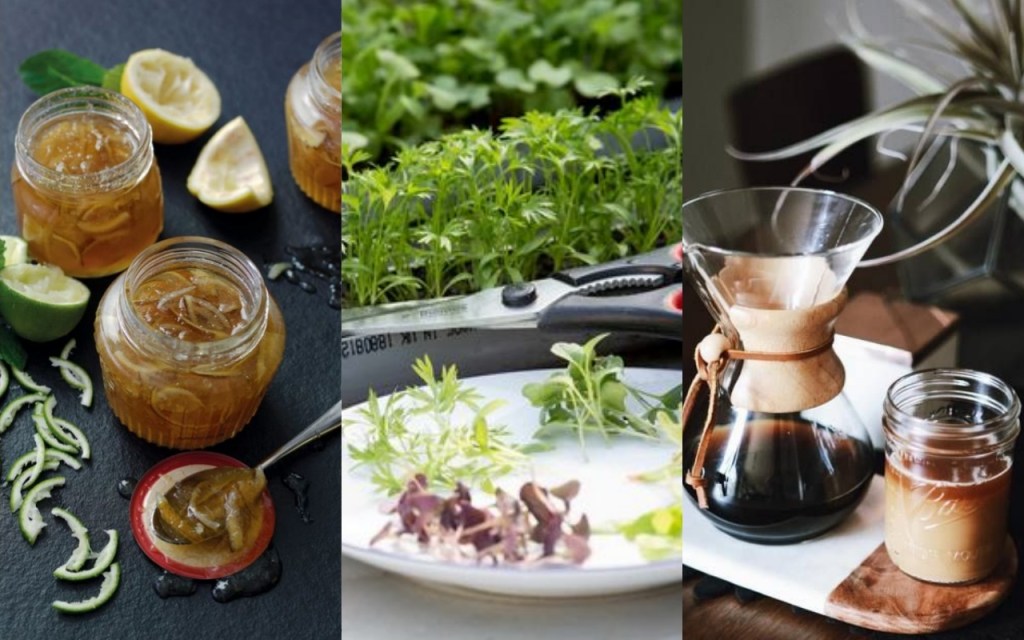
Home Coffee’s-Not always seen as good for you, coffee is having a healthier make-over. As many of us are still working from home and are making our own drinks instead of buying at the local coffee shop, a cup of instant Nescafe just won’t cut it anymore. Recent surveys have found that 45% of respondents were using a new coffee brewing method at home compared to 2019 with a similar amount of people indicating an interest in improving their home- brewing skills.  Which Magazine reviewed electrical and hand-held Frothers recently. Consumers have been using more indulgent creamers and syrups. Sales of plant-based creamers rose buy 30% percent in 2019 and oat, rice and soya milk has been produced specially for the coffee market. Younger consumers like to experiment with flavours to replicate healthier custom-takeaway drinks. For a healthier hit try turmeric latte or matcha latte, which are easily made at home. You can also mix and match your favourite spices like cinnamon and ginger and use honey to sweeten your drink.

AI Created Food-Artificial intelligence is helping food companies create things we could have only dreamed of a couple of years ago. In particular in dairy- free and Vegan products that taste just like the real thing. Like a non-dairy milk that behaves like dairy milk (it froths, foams and blends like dairy) but is made from pea protein, cabbage juice, pineapple juice and other plant ingredients.

Micro Greens-These are not exactly new, but consumer appetite for them is at an all-time high and they are mainstreaming. These tiny shoots are the baby counterparts of plants like carrots and broccoli. You may have enjoyed microgreens at a high-end restaurant in the past, but now you can find them at the supermarket. They are not only colourful but loaded with nutrients and can be easily added to salads and smoothies. These can be grown at home, in a garden or on a windowsill. Home- Growing is also trending in 2021.

Kelp– Seaweed has been traditionally used in Japanese, Korean and Chinese cuisine for thousands of years. Nutritionally kelp is a sustainable superfood, offering several minerals, including calcium, and B vitamins in each serving and environmentally it cleans the water by removing the nutrients that cause algae blooms. Added to smoothies and broths, it gives an extra health boost.

Foods That Fight Climate Change– Food production is a significant contributor to climate change, accounting for a quarter of global greenhouse gas emissions. So, our food choices can help to counteract the effects of climate change. Simply swapping meat for plant-based food like beans one day a week can make a huge difference on your personal environmental impact. Locally, organically grown crops like vegetables have a lower carbon footprint. Consuming produce when it’s readily available saves energy from production and transportation costs because it didn’t have to be shipped from a faraway country. So seasonal cooking is the way to go. Better still grow your own!

Home- Made Condiments– As the pandemic stretches on, consumers are missing their favourite restaurant foods and are trying to replicate these flavours at home. This has led to an increased demand for authentic sauces, chutneys, and seasoning blends that home cooks can use to make restaurant- worthy dishes. With so many people stuck at home, they are rediscovering the joys of cooking.  Small companies producing: spices and condiments have been a huge pandemic hit and making chutneys at home is also becoming popular as these can be free from additives and artificial colours so are healthier as well as tastier than the usual shop bought.

All of these trending foods can be added to your diet with relative ease and I noticed the move away from strange and wacky, designer foodie trends in favour of simple foods that can actually benefit your health and also that of the planet. What next I wonder?

Italian Ice- Creams and Fish Suppers in Scotland

I wrote this post for my travel Blog, But thought it might be of interest to you, so here it it!

I have just read Mary Contini’s book Notes to Olivia about her Italian family’s early days in Edinburgh. She is the owner of the famous deli, Valvont and Crola. Scotland’s oldest Delicatessen and Italian Wine Merchant and one of Europe’s most original Specialist Food Shops. I will come back to the story of this a bit later.

Scotland has long enjoyed an affiliation with Italians since the first immigrants arrived in the late 1800s. It is estimated there are tens of thousands of Scots of Italian heritage, including high profile figures. Italian immigration into Scotland forever reshaped the country’s culinary and social landscape.

Interestingly, post Brexit in 2016 there was the biggest surge in immigration in 100 years. One thing that makes it similar to the first phase of immigration from Italian is that large numbers are fleeing due to the lack of opportunity often in Puglia, Calabria and Sicily.

From the late 19th century, Scotland saw an increase in Italian immigrants. At this time, many Italians experienced poverty. Men fled to Scotland to make money to support their families in Italy, sending for them later. For some, it was seen as a stopping point en-route to America. Initially, they came from northern areas such as Tuscany, but emigration spread to the south by the 1900s. When America changed its immigration policy and closed the door of opportunity for many of the poorest Europeans, Scotland saw a further increase in Italian immigrants. The main reasons to seek a new life was as a direct result of economic conditions. Living conditions were harsh, with famine and sometimes droughts. Furthermore, Italy had an agricultural-based economy that was experiencing severe hardships and industrialisation was slower than in other European nations.  Many saw an opportunity to go elsewhere to earn a better living. After a slow start, in which the Italian immigrants failed to make any real economic progression, the Italians seized the opportunity to move into the catering world. Initially working as ‘hokey pokey’ men, selling ice cream from barrows, these men had been recruited in London and then sent to Scotland. They quickly moved into working-class areas, combining ice cream making with selling fish and chips. Restaurants and takeaways were established and sold food made using ingredients widely available in Scotland like fish and potatoes. To this day most Scottish towns still have an Italian chippy.

Fish and chips became essential to the diet of the ordinary man and woman, through the latter part of the 19th century and well into the 20th century. The fish and chip trade expanded greatly to satisfy the needs of the growing industrial population of Great Britain. In fact, you might say that the Industrial Revolution was fuelled partly by fish and chips! Nobody, however, could dispute the Italian influence after they had spotted the business opportunities to be had north of the border by selling pesce e patate. Stuart Atkinson, Scottish executive councillor with the National Fish Friers Federation, said their role was significant. As large numbers of Italian immigrants entered the Scottish fish and chip trade from around 1890 by 1914, they dominated the trade and opened shops throughout Scotland.

From humble beginnings, by the 1920s these barrows had been transformed into luxury establishments in the city centres via working class areas. There are many famous Italian businesses in Scottish society like Nardini’s which boasted a beautiful Art Deco tearoom that became a key attraction. There was a greater degree of acceptance from the Temperance Movement as the cafés chose not to sell alcohol. Cafés such as these were as much an assertion of identity in a new land as they were a business as a means of breadwinning. Helping to integrate the new arrivals into the communities of Scottish towns and cities. They were popular ventures for immigrants, and locals took very quickly to the idea.

In Glasgow, police statistics show that in 1903 there were 89 ice cream shops in the city. A year later that number had nearly doubled, reaching 184, and by 1905 there were estimated to be 336 ice cream shops in the Glasgow area alone. Many made a living from the Scottish sweet tooth. ITally is slang for Italian and the title refers to both Italian blood and to the raspberry sauce added to ice-cream. It is fair to say that Italian cafés were at the heart of Scottish culture, but the question remains as to whether Italians were fully accepted in Scottish society. Their cafés were often the scene of unruly behaviour. This led to cries that the Italian cafés were morally corrupt, articles appeared in newspapers reporting the ‘ice cream hell’. Their popularity wasn’t universal and they did encounter some hard times along the way, which most likely strengthened the ties of the growing Italian community, who helped one another when needed. Immigrants can enrich and bring a new dimension and flavour to the customs and culture of their adopted land. And I am sure that the colourful Italian community must have added character to the dour cities, towns and villages in Scotland.

What whetted by interest in this subject was the story of brothers Alfonso and Vittorio Crolla who emigrated to Scotland and established a small ice-cream and confectionery in 1906. They were to team up with Raffaele Valvona in 1934, by that time an elderly shopkeeper who was thought by the Italian community to need the acumen of the Crolla family. They sold easily affordable food, mainly to the Italian immigrant community. This succeeded brilliantly, helped by the fact that a lot of returning troops after the war, who had fought in Italy, had acquired a taste for the Italian meats, olives and cheeses. Having concentrated on inexpensive produce, Valvona & Crolla made the shrewd decision, as supermarkets began to undersell local businesses, to specialise by importing the best Italian food and drink. They were to be a pioneer of healthy food, never failing to point out the virtues of low-cost tomatoes and packets of spaghetti. Alfonso died in the war, but Alfonso’s son, Vittorio continued to work with his uncle, taking over the business in 1945 with his brother-in-law, Carlo Contini.

For 40 years Victor Crolla, was the head of the family at Valvona & Crolla.  His Italian delicatessen was famous not only in Edinburgh but among tens of thousands of festival and other visitors to the Scottish capital. The language in the shop was sui generis (a hybrid between Leith Scots and High Neapolitan) It speaks volumes for the family’s relationship with the Scots that during the Second World War the shop’s loyal staff continued to keep it open so that there was a business to return to. Victor Crolla, stepped down in 1985, but in the words of his nephew Philip Contini who ran the shop, he continued to be the spiritual head of the store. In 2019 Philip and his wife Mary, handed over the reins to their eldest daughter, Francesca Contini Mackie, Alfonso’s great-grand daughter making this a fourth- generation family business, bringing a little bit of Italian sunshine to the grey skies of Scotland.

I wish them a continued success; I am a great believer in family and local businesses. I also think it shows how important it is to mix cultures by immigration and hope this does continue as it enriches all our lives for the better!

Veganuary

Veganuary 2021 has had the largest pledge since it’s beginning in 2014. More than 500,000 people signed-up for the 31-day vegan challenge, surpassing the 2020’s total of 400,000. So exactly what is this and who or what is Veganuary?

Inspiring and supporting more than one million people in over 192 countries to try a vegan diet in January. It’s a non-profit organisation encouraging and supporting Veganism. They have worked with businesses to drive up vegan food provision in shops and restaurants, and have made veganism more visible and accessible by working with national and international media. Matthew Glover is the co-founder of Veganuary. After 17 years of working in the window and door industry, his priorities and focus changed when he became vegan in 2011. With a drive to reduce animal suffering, Matthew used his business and marketing skills to launch the Veganuary campaign in 2014 with his partner Jane Land, a former English teacher turned animal campaigner. Today he continues to guide the charity along with a team of very talented and dedicated trustees.

Not just for January, but throughout the whole year, Veganuary encourages and supports people and businesses (large multinational corporations and smaller high-street retailers alike) to move to a plant-based diet as a way of protecting the environment, preventing animal suffering, and improving the health of millions of people. Its website providing: great recipes, interesting articles, workplace challenges and eating guides, as well as helping to fund and support projects.

The UK is now officially the world leader for vegan food launches. Mintel reports that around 16% of new food products released in the UK in 2018 were vegan, which more than doubled the previous years’ output. (Veganuary is cited as being behind this up-swing) In 2020 more than 600 brands, restaurants, and supermarkets promoted the campaign and launched more than 1200 new vegan products and menus in the UK market alone. Products like: Gregg’s Vegan Steak Bake, Pizza Hut’s Pepperoni Pizza, KFC’s Vegan Burger, and Subway’s Meatless Meatball Marinara.

Perhaps the biggest landmark is that British supermarkets have embraced and promoted Veganuary this year more than any other, even advocating the reasons to try a vegan diet. It’s truly game-changing in taking the trend mainstream. As retailers vie with one another to bring out bigger and better vegan products and menus to capitalise on the huge popularity of Veganuary. Now cynic’s could say that, they are simply using it as a marketing opportunity, but I think that would be a bit unfair. As the bastions of the food supply chain, they do know and understand that the most sustainable way forward is plant-focused. And their involvement as well as the endorsement of the medical world has encouraged more people to take up a vegan diet or to at least be more open-minded than previously. Many more people are interested in giving it a go.

Having been a vegetarian on and off since a teenager, I know how difficult it was to find affordable, tasty vegetarian food both in supermarkets and restaurants at times, vegetable lasagne and nut roast been the only uninspiring offering on the menu. Today, the variety is huge and its no longer a take it or leave it attitude to non-meat eaters. It’s quite exciting to see how so many changes have happened!

Aldi has a webpage that not only highlights its plant-based products but also sets out the main reasons to try a vegan diet: caring for animals, staying healthy, being greener and more sustainability. It also features dozens of vegan recipes, tips on vegan swaps and a link to Veganuary’s website. Asda also has a dedicated webpage that explains what a vegan diet is and highlights three of the reasons to try vegan: it’s better for the environment, it could improve your health and it’s delicious! It also features their top vegan product picks and encourages people to sign-up for Veganuary. Tesco has launched its first Veganuary TV and radio ads. It also has a dedicated webpage with recipes, product highlights and tips on making vegan swaps. M&S also releasing its first Veganuary TV and radio ads and produced a 31-day Veganuary meal plan with ideas for making plant-based eating exciting every day of the month. Morrison’s launched a £25 Veganuary Essentials box filled with much-loved vegan favourites to help give your January a kick-start. It also dedicated a Veganuary shopping page on its website featuring all its plant-based products.

As, we come to the end of January, did you try the Vegan diet? If so, I hope you enjoyed it! If not, there is still a whole year to make changes to your diet, not just a single month. So possibly a couple of small changes or baby steps, once a week? 

See https://veganuary.com/  for some great ideas!

Diets- The Good and Not So Good

The New Year is often a signal that it’s time for a fresh start and that has never felt more welcome than in 2021. After nearly a year spent staying home, stressing out and comfort-eating, many of us are looking forward to getting more active, healthier, and taking off all those quarantine pounds in the next 12 months. In a year where our lives were turned upside down, our eating and drinking habits changed accordingly and not for the better. And with health at the forefront of our minds for the foreseeable future, foods that enhance immunity and keep us healthy rule the day.

If you type best diets to lose weight into Google, as I did, it will bring up masses of results. Its totally overwhelming and it doesn’t help when there are pages upon pages of conflicting information in-between lots of dodgy science. When you start researching the best ways to lose weight, your head can start spinning with all the different miracle diets. It can be impossible to know which one is the best to try or to avoid!

Many celebrities have been endorsing their personal weight losses, often very extreme diets and social media like Instagram has an army of true believers, who post about how great they feel after giving up carbs, sugar, meat or food on the latest fad diets!

I have to say at this point, that I am not a trained expert, I am like you interested in eating better and losing some unwanted extra weight. I have visited websites, that I hope offer beneficial and safe advice like the NHS website and been watching on TV where nutritionists and doctors have dieters try out the various diets under supervision.

I have tried many diets over the years, some more successful than others. A knee injury has meant I have not been able to exercise, and the lockdown, poor sleeping patterns and less activity has taken its toll. I find myself with some weight to lose! I had been attending some lectures from a nutritionist and had started to learn more about a more balanced diet, which had whetted my interest. I received several great books on healthy eating as well as too much chocolate for Christmas. I will let you know how I get on later. But in the meantime, see below!

The Good

Throughout my research, the diet that came out on top, time and time again was the Mediterranean one. This is less of a diet and more of a healthy eating plan, so the pounds will come off more gradually, however it is easier to stick too and maintain in the future. Longer- standing Diet plans like Weightwatchers are also still giving good results with a moderate eating and exercise plan.

Mediterranean-style diets– Based on the heart-healthy lifestyle of Greece, Italy, Spain, and Portugal. These diets include healthy fats such as avocados, olive oil, nuts, and fish at least twice a week, plenty of beans, fruit, leafy greens, and whole grains, and even a daily glass of red wine. You can eat cheese and red meat only in moderation. This diet’s primary appeal is in its numerous health benefits and its an enjoyable diet compared to some others. On my travels, I lost weight eating this way and was healthier too.

Weight Watchers or WW-This diet company has been around for years with good results and many dieters been able to maintain their lower weight. The updated version is my WW+, after a personal health assessment you are given a colour-coded program that assigns you a certain number of points per day. (Foods are given points based on calories, saturated fat, sugar, and protein) You can eat whatever you want within that range. You can also eat an unlimited number of 0-point foods (most fruits and veggies and lean proteins such as fish, tofu, beans, eggs, and chicken breast. Coaching in groups or one-to one and advice on exercise, sleep and wellbeing is offered, online or by app. Research has found that dieters assigned to WW were more than eight times more likely to lose 10% of their body weight over 6 months than those trying to diet on their own. https://www.weightwatchers.com/uk/

DASH– is an acronym for Dietary Approaches to Stop Hypertension, but it’s not only for people with high blood pressure. As it is also promoted by the National Heart, Lung, and Blood Institute. The DASH diet, is a flexible and balanced eating plan that helps create a heart-healthy eating pattern. This plan borrows elements of the Mediterranean diet, but it’s a very specific eating pattern that’s been highly researched. It recommends specific portions from various food groups, depending on one’s daily calorie needs. The rate of weight loss can be slow, as it’s a sustainable long-term diet. Your daily calorie needs are determined by your age, sex and activity level. A limit is put on sugar and salt. This diet includes: 6 servings of grains daily, 3-4 servings of vegetables, 4 servings of fruit and 2-3 servings of low-fat dairy. Also recommended are 3-4 ounces total per day of lean meat, poultry, or fish, 3-4 servings of nuts, seeds, and legumes per week and 2 servings of fats and oils daily.  I haven’t tried this myself, but it has been medically endorsed and the diet books have been best-sellers.       https://www.dashdiet.org/

Intermittent Fasting Plan-My nutritionist friend is a great fan of intermittent fasting and is in such great health. As a major trend. It’s claimed to cause weight loss, improve metabolic health and perhaps even extend lifespan. There are a few different ways to do the intermittent fasting plan:

The 16/8 method -Fasting every day for 14–16 hours and restricting your daily eating window to 8–10 hours. Doing this method of fasting can actually be as simple as not eating anything after dinner and skipping breakfast. You can drink water, coffee, and other zero-calorie beverages during the fast, which can help reduce feelings of hunger.

Eat Stop Eat involves a 24-hour fast once or twice per week. For example, if you finish dinner at 7 pm on Monday and don’t eat until dinner at 7 pm on Tuesday, you’ve completed a full 24-hour fast. You can also fast from breakfast to breakfast or lunch to lunch. Water, coffee, and other zero-calorie beverages are allowed during the fast, but no solid foods are permitted.

Fast 800 Diet or 5:2 diet is for those who are trying to lose weight quickly and helps to re-set their metabolism. This was created by Dr Mosley who originally wrote the Blood Sugar Diet because he was diagnosed as a type 2 diabetic. A Mediterranean Diet is eaten for five days and then for two days only 800 calories. In a University of South Australia trial, the 5:2 group also lost 40% more body fat than the standard dieters and most interestingly, their blood sugar control improved, so many were able to reduce medication. People find this way of eating to be easier to stick to than a traditional calorie-restricted diet as for five days per week, you eat normally and don’t have to think about restricting calories. For dieters with more weight to lose this could possibly be a good starting diet. http://www.thefast800.com

Replacement Meal Diet-Even the NHS website states that meal-replacement diets can be effective at helping some people lose weight and keep it off: like Slim fast and Huel. These are more convenient to dieters as there is not a lot of preparation needed as in some of the other diets. Shakes and bars are easy to take to work. My sister lost five stone using the slim fast diet but when she returned to eating normally (her poor eating habits) the weight went back on. So, it does work short-term. But there’s a risk of putting the weight back on again once you stop using the products, as meal-replacement diets do little to educate people about their eating habits and change their food behaviours.

Vegan or Plant-Based Diet-Now, I was a bit surprised at this one as I thought that a Vegan diet was motivated by ethical and moral beliefs rather than weight-loss. Going vegan won’t necessarily help you lose weight but by following a healthy eating plan eating high-quality vegan food like leafy greens and plant-based proteins, you could lose weight. These diets did feature amongst the best for losing weight. Going a step further than the traditional vegetarian diet, vegans shun all animal products, including dairy, eggs, and honey. With the new era of plant-based meats, going vegan is easier than ever. You just focus on eating whole foods derived from plants. Plant-based foods tend to be higher in fibre and lower in fat than animal products, keeping you filled up for fewer calories.

The Flexitarian Diet-Flexitarians are also known as flexible vegetarians or vegivores. Quite simply there are no rules. Some flexitarians will have a meat-free meal once a week while others will only eat meat on rare occasions. As a lapsed vegetarian, who would find a vegan diet difficult, this is quite appealing. Whereas the vegan diet goes one step beyond vegetarianism, the Flexitarian diet, gives you the flexibility to have a small amount of meat on occasion. There are no strict calorie limitations, though a 5-week plan that provides around 1,500 calories a day. By filling your plate with more vegetables, fruits, whole grains, and plant proteins and sticking with the low-calorie plan, you can lose weight and improve your health, there are some great recipes to try.   https://theflexitarian.co.uk/

Not So GOOD

I also came across a few more controversial and possibly dangerous diets. As a rule of thumb anything from a celebrity is best taken with a pinch of salt as our life’s and requirements are very different.

The Paleo Diet– is still getting a lot of attention, even though it’s nearly impossible for modern-day humans to stick with this diet over the long-term. Based on the eating patterns of our Paleolithic ancestors, this diet requires a strict adherence to foods that would have been hunted and gathered, including lean meat, nuts and seeds, fruits and vegetables. Any diet that has a large list of what’s not allowed is going to be very hard to maintain and cutting out numerous food groups from your diet can also eliminate many important nutrients.

Keto Diet-Celebrities like Kourtney Kardashian and Halle Berry are fans of this low-carb diet.  Similar to the Atkins diet. but as carbs are gradually increased on the Atkins diet, intake stays low on the keto diet. You can lose weight initially on this high-fat, low-carb diet, which puts your body into a state of ketosis. (With no carbs to burn off for energy, your cells start burning off stored fat) But keeping your body in what is basically a crisis state is not a viable long-term plan, the diet can lead to side effects such as headaches, muscle soreness, constipation and fatigue. This is not one for vegetarians due to its heavy reliance on meat and lack of whole grains, fruits, and vegetables. I think this diet is too restrictive and lacks health benefits and balance.

The Atkins Diet-One of the biggest fad diets in the industry. The Atkins Diet has now reformed itself as a refreshing new healthy eating plan according to its website.  The pioneer of low-carb diets, Atkins promotes weight loss by restricting carbohydrates and sugar and loading up on protein. The updated diet plan does now include vegetables and berries but still lacks adequate fibre from whole grains and beans.  which can have negative consequences on gut health and moods.  Now, I have tried this one, I lost weight but had bad breath, flacked energy, and didn’t enjoy it that much.

The Five-Bite Diet-From Californian Alwin Lewis, the Five-Bite Diet requires you to skip breakfast and then only eat five bites of your meal at lunch and dinner. The very small portions of this diet will promote weight loss but eating only 10 bites of food per day is not a healthy way to lose weight, I think we can all agree on that. The hunger and lack of satisfaction and lack of nutrients provided by this diet ensures it will be unable to be sustained and this restrictive meal plan will lead to lack of energy and muscle loss. Avoid It…..

The Alkaline Diet Popularized by Tom Brady other celebrities, the idea behind the alkaline diet, is that your food can affect pH levels in the body. This fad diet has no scientific basis. And what about the alkaline diet’s side effects? Whilst, it’s good to reduce your intake of red meat and processed foods, restricting entire food groups can negatively impact your body. A strict eating plan which eliminates grains, dairy and animal foods may be deficient in protein as well as vitamins and minerals. So, there’s a huge risk of malnutrition, especially if you’re not taking supplements or getting important nutrients like protein elsewhere.

The Cabbage Soup Diet-Another fad diet that has been around forever, I tried years ago and it didn’t work and caused a lot of wind. The Cabbage Soup Diet emphasizes eating large amounts of it as every meal. You are allowed to eat one to two other low-calorie foods daily in addition to the soup, which is supposed to accelerate weight loss in seven days. Does it work? Short-term, yes for some, but it can’t be sustained in the long-term and after a very low-calorie diet when you return to regular eating will likely cause you to regain any weight lost. So, is it really worth it?

I hope this has given you some ideas, a diet is personal and what works for one person doesn’t for someone else. But I think a well-balanced diet which builds on a gradual weigh loss and changing eating habits would be more sustainable that a restrictive eating plan and much less of an ordeal!

Learning More Lingo…….

Many Britons are turning to learning languages like never before, according to the Guardian Newspaper. French is one of the most popular choices, as many adults have taken up an online language course during lockdown. The timing does seem at odds with recent events like Brexit and Covid stopping overseas travel. With our recent exit from the European Union, should we be saying a very firm and British Goodbye? Yet for many in the UK, it seems that on our departure it is more a case of Au revoir.

Academics maintain the recent upsurge in language apps in Lockdown, shows a pent-up interest and wish to study languages. For a nation supposedly averse to speaking other languages, the British have been turning in large numbers to foreign tongues as a first resort in the absence of more traditional forms of entertainment and communication.

It shows there are a lot of people who want to learn a language. It’s surprising how often you meet people in all walks of life who are taking language courses. But many people have been put off by unrealistically difficult exam syllabuses at school, GCSE and A level papers are too demanding and grading is too harsh when compared to other subjects. Oxford Professor Katrin Kohl

Formal language learning in our schools has declined substantially over the last 15 years, but there are some signs of encouragement. The British Council’s annual Language Trends survey showed a marked increase in children who took French or Spanish at GCSE in 2019, although A-level entries were still down. It would be great if parents could encourage their children to see the importance of learning another language. In 2018, 96% of pupils in upper secondary education in the EU’s 27 countries learnt English as a foreign language. In a majority of EU Member States, more than three fifths of all upper secondary education pupils were learning two or more foreign languages.

One of the most rewarding aspects of the human experience is our ability to connect with others. Being able to communicate with someone in his or her language is an incredible gift. Bilinguals have the unique opportunity to communicate with a wider range of people in their personal and professional lives.

Despite the decline in schools, adults continue to value language highly, the British Council found that during the lockdown, 10% of adults in the UK began learning a foreign language or returned to one after a break. A third of those surveyed said that Spanish was the most important language for young people to learn, followed by French at 20% and Mandarin at 18%. Thousands more are learning Spanish, German, Italian or other EU languages, with some of them hoping to improve their language skills to a level where they qualify for citizenship of a European country. Since British citizens no longer have the right to live and work in EU countries after the 31st of December 2020.

The UK is now one of Duolingo’s top five countries by the total number of daily learners, according to the app’s UK general manager, Colin Watkins, with a rise in new learners of 132% on last year. (Although it has to be added that we have always fallen well behind our European friends in learning another language in the first place) Events like Brexit and Covid plus cultural moments like the Olympics are driving the change, he said. “Brits now want to be better citizens of the world when we travel, when we do business, when we meet people in the UK.”

I was introduced to Duolingo by a work colleague in lockdown. And since June 2020 have been learning three languages every day.  I introduced my mother to this App and at 76 years old she is learning Spanish. I like the easy- to- use, fun format of Duolingo, I don’t think you could become fluent by this method alone, and I have combined a mix of CDs and books as well as the app. It’s surprising how much daily progress I have made.

I have long been embarrassed at how poor my own language skills and those of my fellow Brits are compared to my French, Spanish and German friends. To think that many ex-pats cannot speak the language of the country they live in is wrong on so many levels. Just because English is spoken in most countries is not really a valid excuse. Today, you can simply use your smartphone or other devices to translate everything on-the-go. But whilst technology certainly helps with communication, it will never replace personal interactions. Be warned, Google Translate is also not fully accurate!

Colin Watkins, from Duolingo, says that many of the 15 million people who have signed up to Duolingo’s online courses are not aiming to become fluent but to gain a basic level of understanding. As one of our first courses French was already very popular, so to see it make the top five shows new learners have chosen it because they want to travel there in the future, maybe want to do business, emigrate, or just pick up on what they learned in school.”

Other language learning apps are seeing similar rises. Memrise saw a large increase in new users in March, and 70% of people using its platform are learning Spanish or French, while German, Italian and Japanese are also popular.

The app, Babel helps its community remember the vocabulary they learn through six memory stages using “spaced repetition,” moving words through exercises that are arranged to aid retention. In bite-sized, 10–15-minute lessons, students have opportunities to gain skills in reading, writing, grammar and speaking in their target language in likely scenarios, especially for travel.

Yes, learning a new language is a big challenge. But if you can get in the right state of mind and you’re not looking for overnight fluency, the progress you make can make can make you feel incredibly proud. You do have to remain consistent for a few months to see some steady progress, but it is totally worth it and the more you do it the easier it gets. It’s also a great way to keep your brain in trim as studies have shown that using more than one language can delay the onset of dementia by four to five years. Benefits well-worth having, I would say.

Bon chance et au revoir.

Happy…ish new…ish year

So, 2021 starts, it’s a Happy…ish New…ish year. Life is still very uncertain for many of us. We have gone back into Lockdown in the UK, Brexit, despite been finalized, is still always on the news. Donald Trump is still saying exactly the same as last year.  The terrible scenes from the USA are like a bad Hollywood movie, my thoughts are with them and I hope that moving into 2021 some calm can return to this fractured country of America .

It’s been a Luke-warm, start to the year, after such a challenging 2020, that’s for sure, but all we can do is just carry on, as best as we are able to do. Most year’s usually starts with a list of New Year resolutions that are rarely kept. This year, you can’t start going to a Gym, only to stop in February and March. And there is no real excuse to not start writing that novel, you never quite have the time to do or learn a new language. You have lots of free time to fill.

So, I suppose it’s a rare opportunity, to get fitter, thinner or start a new hobby with less reasons to not be able to do so. When things then do return to some normalcy, we will be fighting fit (Physically and mentally) and raring to go again?

Depression is always worst in the dark winter months and post-Christmas, been stuck at home makes this even worst. So, finding something enjoyable or purposeful to do, is going to help to keep those dark feelings away. Whist, I do try to keep up with the news it can be very depressing, so watching fun films or reading a great book can be uplifting. Netflix, have a good selection of films and series to catch up on. Anything creative is also a great way to spend time, it doesn’t need to be gallery- worthy but just enjoyable. It is possible to buy most art- stuff online, The Works and Great Art, offer good service and prices. So have a go, even get your children involved. Making and creating is ageless.

Many local libraries are still open for collections and have a free on-line kindle and audible book resource.

Keeping in touch with others is vital, by telephone, WhatsApp, Zoom or Messager. If you do know of people on their own, keep in touch, please. Together, things can be better. Support others and be supported yourself. I think that this is something we have all realized more than ever. We are all part of a community.

Together, we can all make 2021 a more prosperous and happy year.

As, the famous line goes It’s a wonderful life. Take care and stay safe.

A Big Thank You and Happy New Year

This year has been like no other, the year started with terrible flooding, followed by Covid and throw in the ongoing saga of Brexit. Many of us have spent large parts of the year stuck at home, if you were fortunate you received a reduced wage, if you were not so lucky you lost your job or business.

Throughout this the essential services and key workers have worked harder than ever, working longer hours and even suffering abuse at the very people they were helping. We have clapped, rung bells, and many nimble-fingered ladies have donated their time to make scrubs and masks for the NHS. But very little can really thank them for their ongoing dedication.

So, I wish you all a Happy New Year, may we all start to have some normality in our life’s. And the very people who actually keep the country running, and by that not the bosses in the suits, but the workers who look after the sick, teach the young, tend for the old and vulnerable, keep the streets clean and keep the food chain going and run food banks. I hope you all get a much- earned rest!

From the chaos, I hope we can start to see what truly matters and hopefully the sense of community will remain, long after the current crisis fades.

So, a big, heart-felt thank you to those who put others ahead of themselves, you are true heroes!

Goodbye to 2020 and Hello to 2021

The First Christmas Card

Sending Christmas cards is such a key part of the Christmas tradition, often as a way of keeping in touch with the friends and family we are not able to see as often as we would like to. Although, in past years this has decreased a little, with E-cards, social media and the increase in postage costs. There is still something very special about receiving and sending a card, to someone you care about.

The very first recorded Christmas card was sent by Michael Maier to James 1st and his son Henry Frederick, Prince of Wales in 1611. It was discovered in 1979 by Adam McLean in the Scottish Record Office.

However, commercially, it was not going to be until 1843, that Christmas cards, as we know them, were first designed and produced in England by John Callcott Horsley. An edition of 1,000 hand-coloured copies was placed on sale in London. Henry Cole, sent the first Christmas card. He was the founding director of the V&A (who still have a special interest in collecting and displaying greetings cards) and a prominent civil-servant, educator and inventor. In the 1840s, he was instrumental in reforming the British postal system, helping to set up the Uniform Penny Post which encouraged the sending of seasonal greetings on decorated letterheads and visiting cards. Which seems ironic since the modern postal system is a factor in the reduction of cards been sent today.

Cole was a close friend to the artist John Callcott Horsley and asked him to illustrate his idea. Horsley’s design depicts three generations of the Cole family raising a toast in a central, hand-coloured panel surrounded by a decorative trellis and black and white scenes depicting acts of giving, the message was of celebration and charity. Cole then commissioned a printer to transfer the design onto cards, printing a thousand copies that could be personalised with a hand-written greeting. Horsley himself personalised his card to Cole by drawing a tiny self-portrait in the bottom right corner instead of his signature along with the date Xmasse 1843.

Cole’s Christmas card was also published and offered for sale at a shilling a piece, which was quite expensive at the time. In the 1840s, it was a period of change with Prince Albert introducing various German Christmas traditions to the British public like decorating a Christmas tree. Cole may have been ahead of his time but the commercialisation of Christmas was on its way, prompted by developments in the publishing industry. The growing middle- classes and authors responded to the trend.  Charles Dickens wrote Christmas- themed stories for Household Words and All the Year Round and published A Christmas Carol in 1843. By the 1870s the Christmas trend was well and truly established.

The second Christmas card designed was by artist William Maw Egley, which came a few years later in 1848. The design is noticeably similar to the first card as both show scenes of middle-class festive merriment offset with acts of seasonal charity and both were printed on single sheets about the size of a ladies’ visiting card. Early Christmas cards were influenced by the already popular Valentine cards and featured paper lace, which was embossed and pierced paper and layers that opened to reveal flowers and religious symbols like angels watching over sleeping children. New printing processes and techniques in 1860, that combined colour, (chromolithography) metallic inks, fabric appliqué and die-cutting to make elaborately shapes were of great importance for Victorian Christmas cards. The aesthetic cards produced in this period were considered tasteful and refined and were sold in bookshops and stationers and were still expensive, at ninepence the two designs. Publishers such as Hildesheimer & Co. started to import cheaper cards from Germany, before producing the penny basket in 1879, which contained around a dozen cards and was sold through tobacconists, drapers and toy shops. The Half Penny Post, introduced in 1894, further boosted Christmas card sales, with a less expensive postcard format becoming popular. Victorians now exchanged, displayed and collected Christmas cards in vast numbers.

This period saw the debut of many of the meaningful symbols and decorative devices that we now associate with the festive season; with indoor scenes of seasonal rituals and gift giving, winter scenes of robins, holly, evergreens, country churches and snowy landscapes. Scenes of a middle-class household were shown like decorating trees, children’s games, pantomime characters and sitting down to a Christmas dinner with crackers. Renowned illustrators produced designs for Christmas cards, Linnie Watts adapted her poignant paintings of children. Whilst, the artist Harry Payne, turned sentimental portrayals of soldiers into Christmas cards connecting families and friends across the British empire. Such heartfelt communications were ready-made keepsakes and collecting Christmas cards became a middle-class passion.

In the book The History of the Christmas Card in 1954, the collector George Buday, suggested that the Christmas card from its beginning was more closely associated in the minds of the senders with the social aspect, the festivities connected with Christmas than with the religious function of the season. I think this is in part true, but I also think that it highlights the importance of the family to Victorian England. This was the time of social reform and change, which saw improvements in the living and working conditions of the working-class man and his family.

Henry Cole’s Christmas card venture was initially judged to be a commercial flop. However, one of the first cards he produced was auctioned in 2013 and sold for £22,000, so I am sure he would have been very proud to have been proved right in the end. Christmas cards have grown into a multi-million pound retail phenomenon with around a billion cards bought in the UK each year.

The V & A in London, holds the national collection of cards for all occasions with over 30,000 examples of cards. More than half of which celebrate Christmas. They also revive Cole’s entrepreneurial spirit by launching exclusive card ranges in the V&A Shop each year, inspired by favourite designs from this historic collection. These beautiful cards are available in their museum shop and online.

A happy Christmas to you all and a wonderful New Year.

That Smells Good Enough to Eat

The official fragrance grouping for perfumes that smell like food is gourmand. According to the dictionary a Gourmand is a person who is fond of good eating, often indiscriminately and to excess, so it makes sense that gourmand fragrances are all about delicious, edible notes served with reckless abandonment and usually not for the faint-hearted. Some of the top-selling perfumes are in this group: Opium, YSL, Euphoria Gold, Calvin Klein and Angel, Thierry Mugler.

These fragrances tend to smell almost edible usually featuring notes such as vanilla, caramel, honey, chocolate and black coffee. Often sweet, but also savoury and umami.

The first perfumes that many of us wear as teenagers are super- sweet with notes of sugar and fruits, think of the Body Shop’s Vanilla scent. This is related in some ways to hormones as younger women are drawn to these scents.

Perfumes that smell like food-stuffs are not in fact a new idea. Gourmand perfumes are almost a century old and in the last few years are riding a new wave of popularity. The French perfume company Guerlain released Shalimar in 1925 to counteract all the heavier musk and spice scents that were worn and this smelled like baby powder and biscuits.

There is really no shortage of scents in the marketplace, that allow you to smell of your favourite foods, no matter how random these may be. From the subtle scents of citrus or tea to the extremes like cheese.

For meat lovers, the perfume house, I Hate Perfume combines the smell of roast beef, parsley, herbs, black peppers, smoked woods, patchouli, cedar and tobacco absolute. Whilst, in 2008 Burger King launched their meat infused spray, Flame, marketing it as the scent of seduction with a hint of flame-broiled meat. I am really not too sure about that one, some men may like this though?

Frying bacon has to be one of life’s greatest smells. In 1920, John Fargginay, a Parisian butcher discovered the ability to dramatically elevate his customers mood with a secret recipe blending eleven pure essential oils with the essence of bacon. This was to become a fragrance; it is said that even film stars and heads of state would frequent his shop to procure the magical elixir of Fargginay’s Bacon Cologne. After a huge fire on July the 4th, 1924, the business was lost and so was the formula. Fargginay, Inc. was founded in 2000 (the perfume was launched in 2011) by John Leydon. Who was passionate to uncover and resurrect one of the greatest legends of the early 20th century. The company classically designed a fragrance that used a traditional structure to create an untraditional, artisanal gourmand scent. 

 Other companies have produced food inspired scents, Demeter, have a wide range, one of the most unusual been Lobster featuring subtle hints of sweet meat, the sea and butter. It does sound good enough to eat, but do you want to smell of fish.  www.demeterfragrance.com

The Stilton Cheese Makers Association commissioned an aromatics firm to create Eau de Stilton. It was part of their Stick on the Stilton 2006 campaign, to encourage people to eat more Stilton cheese. The perfume, billed as eminently wearable, blends Yarrow, Angelica seed, Clary Sage and Valerian to recreate the earthy and fruity aroma of Blue Stilton cheese. The smell of strong cheese causes me to feel quite unwell, so I think this one is not for me.

Jean-François Laportes, niche Parisian brand l’Artisan Parfumier is inspired by nature and creates many lovely perfumes. Their best-selling Premier Figurer scent, echoes a fig tree on a summer’s day in Provence with an enveloping freshness with milky woody notes. Poivre Piquant, combines white pepper and the sugary sweetness of milk, honey, and liquorice. which is a spicy yet delicately sensual aroma.  http://www.artisanparfumeur.com

So many artisan companies are producing gourmand perfumes which are very wearable and not in the least gimmicky. As after all not everyone wants to smell of flowers. Many of us are foodies and becoming more aware of using exotic spices in our food, so why not add these stunning aromatic ingredients to our scents!