The Rise of the No-Wash Movement

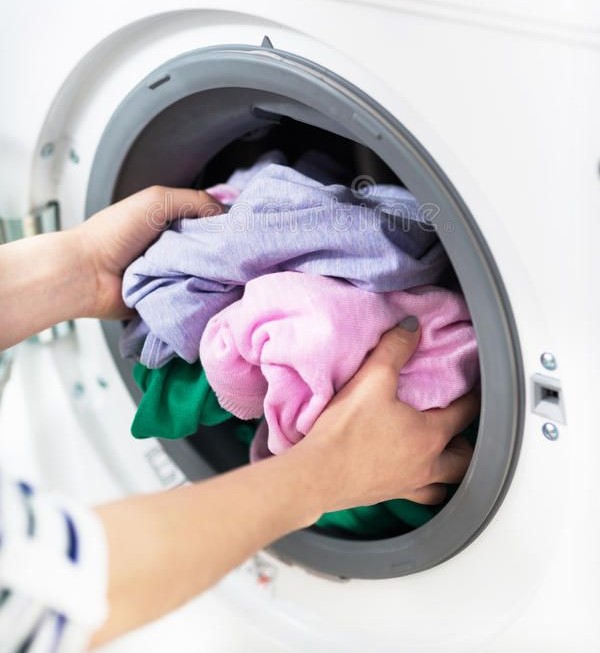
There’s a growing amount of people who believe in washing clothes less or not at all, even some well-known celebrities have announced that they don’t wash their clothes that frequently. Others are re-thinking their washing habits due to concerns for the environment when washing man-made fibres like polyester and the rising costs of energy bills.

I found this article (By Matilda Welin) last year which was very interesting and would like to share it with you. My mother has always said that people wash their clothes far too much and it shortens their life span. We had to change from our uniform when we came home from School so some items could be re-worn the next day. I still to a certain extent do this now. I always change my work clothes straightaway on coming home.

Wearing something for a few hours then washing it is a fairly modern concept. I remember when my teenage nieces wore 3 vests together with skinny jeans then would put them in the wash basket after one wear, my brother- in- law used to then take them out and put them back in the drawer. (Unbeknown to them) I suspect this is a familiar tale.

“One of the worst things that you can do to a garment, in terms of its durability, is wash it. During a wash garments can tear, shrink and lose colour”

Mark Sumner, a lecturer in sustainable fashion at the University of Leeds.

Sumner studies how microfibres from household laundry end up in marine animals. While he says reducing the frequency of our clothes washing is the right choice for the environment, he doesn’t advocate a complete washing machine ban. We don’t want people to think that they can’t wash stuff because they’re destroying the planet. It’s about trying to get the balance right. Washing clothes is important for medical and hygiene reasons, for example for people suffering from eczema who are trying to avoid irritation caused when our natural skin bacteria multiply inside our clothing. It’s also important for people’s self-esteem to not feel embarrassed about their clothes because they’re dirty or smelly”.  

Not washing your clothes can be seen as poor hygiene. Certainly underwear, socks, tights and items worn close to the body would require more frequent washing than jeans or knitwear. But have we become too clean?

Designer Stella McCartney caused headlines in 2019 by detailing her low-clothes-cleaning habits. “Basically, in life, rule of thumb, if you don’t absolutely have to clean anything, don’t clean it. I wouldn’t change my bra every day and I don’t just chuck stuff into a washing machine because it’s been worn. I am incredibly hygienic myself, but I’m not a fan of dry cleaning or any cleaning, really.”

The Indigo Invitational invites people from across the world to wear the same pair of raw denim jeans for a year. This is the world’s largest and most-inclusive raw denim fading competition and has been going since 2019. Giving you the chance to connect with and compete against the world’s best denim faders. Since denim becomes softer when it’s soapy and wet, one of the keys to achieving high-contrast patterns is to avoid washing them. More than nine out of 10 participants delay the first wash of their trousers until they have been worn 150 or 200 times. A few of the raw denim wearers go even further, adopting a never-wash philosophy. Instead of using a washing machine, raw denim wearers learnt other ways to care for their garments, like exposing them to UV sun rays or just airing them overnight.

For Bryan Szabo, the organizer, the low-wash habit began when he bought his first pair of raw denim jeans in 2010. Travelling from his native Canada to Europe on a six-month trip. In part due to the lack of facilities, he never washed his jeans. ( Although he assures us he now does wash his jeans occasionally)

“It was a quirk about me that I had these stinky jeans, they smelled awful. My jeans would, be in, like, a pile on the floor at the end of the bed. You walked into the room and you could smell them”

Mac Bishop, founder of clothes company Wool & Prince when he started promoting his women’s brand, Wool &. He felt that centuries of sexist laundry advertising meant women would be less responsive to the idea of not washing their clothes and research backed him up, showing that, with women, environmentalism was a more effective reason to give for washing clothes less. The Wool& brand sells merino wool dresses with the help of a “challenge” where customers wear the same dress every day for 100 days. I am not too sure what I think about that, but I do know that pure wool garments particularly cashmere shouldn’t be washed too much. (The rails in Charity shops of over-washed knitwear backs this up) I always wear a washable layer under my sweaters and air the garment overnight. So far no one has commented on the smell!

This subject will always divide people. Some people will choose to wash clothes more than others and it is a personal choice. However, by all making some small changes in our washing patterns this could have a huge impact on the environment as well as clothing lasting longer.

So, it must be worth trying to make a small change!
  I Might Wear it Again!

How many of us have something we haven’t worn in years? This has been my mum’s mantra for years, despite my attempts to encourage her to have a good sort out.

It could be pieces that at one point in time (when you were younger and thinner) you loved to wear or items that were very expensive, in some cases too much so. Perhaps you are going to slim into it, or are keeping it in case you need it in the future.

Sometimes we keep things that can be passed onto to a younger generation. As a design student, I had some beautiful Italian shoes ( Prada of their day) from my grandmothers friend, which started my love of good shoes. I wore my grandfather’s classic Crombie overcoat every day for ages and which I wish I still had.

There’s something very special about items that can be passed on. Having something of good quality, when its properly looked after, will stay with you for a long time. I don’t ever regret these purchases, but the items I bought for the wrong reasons like sale items or items that weren’t totally right.

Jack Fordham, manager of vintage store the Vault, sees his wardrobe as a collection, much like a collection of books and sees the real value of a garment.

 “If I don’t wear it now, I might wear it in 10 years’ time. Holding on to clothes is both sentimental and economical for me”. Jack Fordham

Whilst, I understand this and agree to a certain extent. I always remember a very stylish and fashionable friend telling me, if you wore a look the first time around or even the second time round, be careful not to just look as if you are in a time warp. As, what looks great at 20 or 30 may not start to look quite the same at 40 or 50. Its totally possible to look fashionable at all ages but trying to dress the same as someone 20 years younger doesn’t always work. The ever-youthful Kyle has given away her gold hot pants! I guess knowing what to keep and what to give away to a new home is the key to a great wardrobe, which doesn’t require its own room or spill over into several rooms.

Objects hold memories, items of clothing in particular are like portals to distinct moments of our life’s, they remind us of great nights outs, happy events and holidays. So, don’t hold one to items that have negative memories.

Anna Chiu, from sustainable american label Kamperett values clothes that have a sense of history. In her own design process, she often draws on items inherited from her grandmother. I have added an image.

 “I love that her pieces are so timeless in design and are still in such great shape that they are able to be used well, in multiple lifetimes. Anna Chiu

As we try to become more sustainable in all our practices, clothing been a key area, myself included, this is where our resolve does tend to weaken and garments are held onto often for emotional reasons. I guess the best way to deal with this is to buy what you need and use it now, not for the future or because the price was good. I have been guilty of this myself on numerous occasions but buying something in several different colours never works. I always seem to just wear the first item.  As a child when we got new clothes particularly shoes, we always wanted to put them on straight away. I would say that as adults we need to feel the same about what we buy. If your new purchase hangs unworn for a couple of weeks return it, sell it on or give away.

I leave the final words to fashion designer Jason Hewitt.

 “I don’t believe in disposable anything, it’s wasteful and places an unnecessary burden on the environment. There are costs in terms of energy and water consumption, shipping, human labour. All these small things add up and go into every garment. So, when you buy something, it needs to outlive the cost of its impact.”

Sustainable, Ethical and Fair-Trade Fashion Brands Making a Difference

The latest fashion trend to hit the catwalk isn’t a seasonal colour or a must-have style, it’s the concept of sustainable fashion and ethical clothing and it’s actually not that new either. This has been happening quietly in the background for some time and is only just going mainstream. Many different brands have been focusing on combating various issues in the fashion industry. As I said in my last blog post, this will not happen overnight but as Safia Minney says if we all bought only one piece of ethical clothing, life’s all over the world would be transformed.

Finding fair trade and ethical companies is not always easy, which can sometimes be a deterrent in shifting your buying habits, but companies like Good On You and Buy Me Once are making it easier. The positive impact of spending time researching what you are buying can have on the environment and third world communities is absolutely worth it. There was a time when sustainable clothing would conjure up images of unflattering and suspiciously scratchy styles. Thankfully, there are now a wide number of fashion brands that are changing that perception.

In addition to its implications for the environment and ethical practices surrounding the production of garments, one of the major benefits to purchasing ethical, sustainable, and fair-trade clothing is that it is almost always of a higher quality. This means garments last longer, and when they do show signs of wear, companies encourage you to repair, rather than replacing it. Some businesses even recycle clothing. I send my old cashmere sweaters to a UK company who use the yarn to make new products.

One of the leading lights in ethical clothing is Safia Minney, with her company People Tree. A pioneer in sustainable fair-trade fashion, her story started in 1991. The core mission has stayed the same over the past three decades since award-winning social entrepreneur Safia Minney founded the company. Every product is made to the highest ethical and environmental standards from start to finish, yet the ranges are still contemporary, versatile, affordable and look great while respecting people and the planet. The fashion collections feature organic cotton, Lyocell and responsible wool and are made using traditional artisan skills such as hand weaving, hand knitting, hand embroidery and hand block printing. Employment is created in rural areas where work is often scarce. All clothes are dyed using low impact dyes so are free from harmful azo chemicals which are frequently used in clothing manufacture. Natural materials are used where possible, avoiding plastic and toxic substances.

When Safia ordered a Tradicraft mail-order catalogue herself to buy fair-trade clothing, she realised how much power her money had when you shopped ethically. Like many people she felt that fair-trade shopping at times, conjured up images of macrame potholders and soapstone elephants. Recognising that: most people were happy to buy something that was fair-trade as long as it looked good, they don’t want shoddy goods.  If she was going to offer a lifeline to Third world artisans their products had to be saleable and that meant stylish. Whilst living in Japan, she published an organic directory, which evolved into a catalogue. Sourcing not just from other fair-trade organisations but actually dealing directly with the producers; weavers, dyers, jewellers and other craftspeople. By dealing directly, more money could go back into the community as there were no middle-men, like importers. Their first fashion range in 2006 met the Global Organic Textile Standard certified by the Soil Association and People Tree was also the first fashion company to be awarded the World Fair Trade Organisation product label. These certifications guarantee their dedication and compliance to the principles of fair trade, covering fair wages, good working conditions, transparency, environmental best practices and gender equality. This UK brand sells everything you need for your wardrobe from tops and dresses to underwear, sleepwear and active-wear.           http://www.peopletree.co.uk

Now, there is a distinction between ethical and fair-trade clothing. Fair-trade fashion must be certified, and specifically focuses on the compensation for workers and farmers associated with its production, while ethical fashion aims to reduce the negative impact on the environment. But I think that both are about sustainable clothing and about the money we spend been for the greater good.

The Patagonia clothing company is definitely setting the bar very high for other outdoor clothing manufacturers. Patagonia, allow you to re-cycle in store and provide guides for repairing and caring for other items. All of the cotton garments from this brand are certified organic by GOTS, so you know the entire manufacturing process follows organic guidelines. They’re also fair-trade certified. The clothes themselves are mostly comfortable, simple ever-day staples for men, women and children. Their website has a lot of great content and information.    eu.patagonia.com

Now, some very well-known names have started to join the movement for ethical and sustainable fashion. One of the biggest names in fashion is Ralph Lauren. This is a great example of a large brand making a simple change, yet it has the ability to make a significant impact on the environment because of its sales volume. The Earth Polo, also available in men’s and children’s variations, is made of recycled water bottles and uses dyes that don’t require water in the application process. Even though it’s just a shirt, Polo Ralph Lauren estimates that it will save the equivalent of 170 million plastic bottles from landfills by 2025.

One of my favourite designer companies is New York-based brand Theory. They have been committed to sustainability since the launch of its Good Initiative in 2017. Theory for Good spotlights the supply chain with the brand’s aim to make us, the customers, aware of where our clothing comes from and whose skills contribute to making our clothing. Originally focusing on wool sourced responsibly in Tasmania and South America and linen consciously crafted in Italy. The brand has now upped its sustainable credentials with Good Cotton, a newly launched capsule collection.

One of the UK’s most successful knitwear companies is Pringle.  For over two centuries this brand has embraced the traditional, the innovative and the unexpected. They have been using recycled fibres to creating limited- edition jumpers. This knitwear shows a commitment to the environment in more than one way as it featuring a graphic earth print and the word Re-Loved. No new raw materials were used in the production of the two jumpers made with 100% recycled fibres even the garment tags are recycled. Whilst not cheap, you can count on the brand’s knits to stay in style and the quality to last for years so consider these sweaters a long-term investment.

Now, these are all high- priced brands, but high-street brands and stores are still making changes. The fashion chain H&M has a Conscious collection, in which each item in the range has an aspect that lessens its environmental impact, like been made of organic cotton or recycled polyester. The prices start quite low so you don’t have to spend a fortune on sustainable fashion. I have bought items myself from this range and was impressed by the quality too. You can also recycle your unwanted clothing at H&M stores for a discount, even if it’s torn up and can’t be re-worn, the brand makes sure the clothes are used for something else and won’t end up in a landfill.

If you prefer to shop by mail-order, British brand- Boden is sustainable. The company, which was founded more than 25 years ago, is renowned for its clothing collections which are both ethical and expansive. Customers locally and abroad can shop for the whole family, as the brand offers expedited worldwide shipping options for its sustainable and affordable clothing for adults, children and babies. The clothes are shipped in recycled and recyclable packaging too.

We can try and make our wardrobes more planet-friendly in non-shopping ways by organising clothes swaps with friends, which could also be a fun way to spend an evening. There are also a number of high street initiatives that allow us to recycle our well-loved clothes when we no longer need them.

If we can direct our conscious spending towards clothing habits that make us feel and look good, without breaking the bank but also can contribute to others then we are all playing our part in the larger scheme of things. Remember as consumers you do have the power to change the way goods are made!

Sustainable and Ethical Fashion- Just Another Trend?

Even before COVID-19, fashion insiders were claiming that the fashion system was broken and had been for some time. The sheer speed of the fashion circle, heavy discounting, ethical problems and environmental issues had bought it to its knees. The fashion industry, causes more pollution than international flights and maritime combined. According to WRAP (waste and resources action programme) every year 350,00 tonnes of used clothing ends up in landfill. High-street fashion, is coming under more and more scrutiny. Shoppers are becoming more considered in their approach, now they know about the far greater costs of cheap labour, poor working conditions and the damage to the environment. More and more consumers want to become sustainable. However, the clothing industry is now the most unsustainable that it has ever been. For the health of the planet does this have to change once and for all?

Sustainable fashion is the movement and process of fostering change to the fashion industry and towards greater ecological integrity and social justice. Concerning more than just addressing fashion textiles or garments. It comprises of addressing the whole infrastructure of fashion. While fast fashion describes clothing that is cheaply made and intended for short-term use, sustainable or ethical fashion is the pole opposite and is sometimes referred to as slow fashion. This takes into account the full life-cycle of the product from the design, sourcing and production processes. looking at everyone and everything it affects such as; the environment, the workers, their communities and even the consumer.

The textiles industry is wreaking havoc on the environment between the processes to make clothing and the waste when it gets thrown away. Both brands and consumers have been taking a much-needed interest in improving these issues. And while there’s no such thing as Eco-friendly clothing as all garments have at least some negative impact on the environment, there are brands, some very well- known, working diligently to help make a difference.  It’s a complex issue and there isn’t one brand on the market that’s currently capable of tackling everything on its own. I will write about some of these in my next blog.

There are five main issues being addressed in the fashion industry:

Water usage: The demands for fresh water for drinking and agriculture is far surpassing what’s available. As a result, some brands are now looking at their supply chains to see how they can cut back on how much water they’re using.

Hazardous chemicals: Dyes and finishes from the production processes are dangerous for the workers, and can pollute community water sources. These chemicals may not affect the consumers, but they can be a problem for the workers and the people who live in the same areas as the factories. Fashion brands are now tasked with coming up with new ways to address the damage caused by dyes and finishes.

Short lifecycle: Stores are constantly launching new designs and consumers are regularly updating their wardrobes. The biggest goal in sustainable fashion is to buy less, use things for longer and to make clothes last. Second-hand, used clothing is been promoted. Buying something used is more sustainable than anything new, so it’s automatically going to cost you less. The fashion industry calls it recommence and its totally on-trend.

Waste: On top of having a short lifecycle, there needs to be a way to create less rubbish by re-using and re-making products. One opportunity is using recycled materials in new clothing.

Agriculture: Natural fibres like cotton are often grown using pesticides and treatments that are harmful to the farmers, workers and wildlife in the area. There are now more options available for organic cotton, linen and other fibres which use less water than the conventional growing methods. Brands are looking at being organic throughout the production process not just by using organic fabric.

It requires, both a shift in what you buy and where you buy it from, when you want to be ethical and sustainable. Fast fashion is easy for consumers because it’s inexpensive, lasting for only a season and in some cases clothes that only last a few wears. With ethical fashion, the price tags for quality pieces can be daunting. A survey by the UK magazine Cosmopolitan on Instagram found 70% of their followers asked didn’t buy from sustainable fashion brands because they were too expensive. There is an argument for all or nothing calling for companies to become 100% sustainable. In truth, the only piece of clothing which is a 100% sustainable is the one already in your wardrobe. High street brands that are at least trying to go down a more ethical route have been accused of Green-washing and just trying to be seen as doing the right thing to sell more clothes. Its certainly hard to come up with the best solution and it is too easy to just say companies should do more.

The most sustainable fabric is one that’s been used previously, anything new regardless of the material, has a negative impact on the environment. More companies are looking at fabrics made with recycled material, most commonly you’ll find polyester made from recycled water bottles. The labels should show details like 100% recycled polyester or made with partially recycled materials.

There has been a return to the pre-loved and second-hand market, with many great re-sale apps and websites. Charity shops are a gold-mine for interesting bits and pieces and better still, you may find something that no-one else has and you are helping the charity to raise money.  Well-known celebrities, like Professor Green have been in TV advertisements talking about looking after clothes and having the same jacket for 15 years. Going back to my minimalist blogpost having clothing that you love, look after and wear all the time is a practical, affordable way to follow fashion in your own personal style in 2020.

Is sustainable fashion and ethical clothing the latest fashion trend? Or is the fashion industry talking steps towards doing the right thing or has it been forced into a corner by consumers who are no longer accepting throwaway fashion? When I grew up in the 1970s, I saved up for months, from my weekend job, to buy some jeans, admittedly from a designer brand, then I wore and wore them for ages and I really treasured them. This doesn’t happen much now, perhaps it should!