
Sports for All- At All Ages

I found this article in the Guardian a year ago and I think its an important subject to think about and talk about, particularly as we start to age.

I don’t really regard myself as sporty. Certainly, at school I wasn’t, and often tried to get out of games lessons. I swam a bit as a child and still do when I can, although I prefer swimming when the weather is warmer. I walk as much as I can and practice yoga and have been known to go to a gym once in a while. But is this enough?

Which sports are the best for you and does age make that much difference? Are there ages at which certain sports can have more of an impact on your body?

” Initiatives from Sport England show one factor is key- enjoyment. That can come from the environment, camaraderie or friendship as much as the sport itself. What’s important is to find your niche. The thing you enjoy.”   Professor John Brewer        

A lot of emphasise is put on winning but does sport have to be competitive? If you are never going to be good enough to play at Wimbledon does that meant you can’t enjoy a few games of tennis at your local park? If a sport gets your endorphins flowing, it’s right for you, whatever age you take it up. Matt Rogan and Kerry Potter’s book All to Play For- writes about Competitive sport may be for the few, but play is for everyone.” Wise words indeed.

Park Play runs free two-hour community play sessions on Saturday mornings in parks across England. Plans are afoot to expand Park Play into Scotland.

We all need more play in our live. Play is a fun, informal, varied, social activity with no particular goal. It’s inclusive and can reach those who don’t think of themselves as sporty.” Rick Jenner,Park Play

Our life’s are busy with work and family commitments particularly for women. And sometimes taking time for exercise falls by the wayside.“In the depths of caring responsibilities, you can feel guilty about taking time out for yourself. The answer is exercise that involves as little faff as possible” says Sports Psychologist Dr Josie Perry.

Today there’s a big selection of online classes, often for a low cost or even free. Some morning and afternoon TV shows feature sessions involving wonderful celebrities like Joe Wicks. Exercise can help to boost cognitive and mental health. Doing something that involves all the family can be fun as well as beneficial to health and well-being.

As we start to age, getting regular exercise can make a difference in the later years. Advice for the over-50s is usually for low- impact activities such as cycling or swimming. But fitness experts are saying weight-bearing activities are crucial, because as we age, muscle mass declines and with it goes strength and eventually, the ability to perform basic tasks. While weight-lifting can conjury up unachievable images for most of us. Mimi Bines, who coaches at women-only gym Lift Studio LDN says “I’ve been training for 10 years and you probably can’t tell! And it’s a fact that older people who lift weights have better bone density than people a lot younger. For women in particular, it’s great to learn performance-based skills after years of weight loss being the only goal.”

YouTube has loads of free tutorials, if you don’t want to go to a gym or find this too costly. I have some light hand-weights and a Kettlebell, these did take a bit of getting used to, but starting slowly, a few times a week as been shown in studies to rebuild muscle tissue in people from ages 50 to 90.

Between the ages of 65 and 74, sedentary time in men and women increases to 10 hours a day. Although some active people will continue to enjoy running and cycling into their 60s, taking up a whole new sport can be daunting for some in later life. Which is quite understandable.

“It’s really important to do something that involves a bit of impact. Though too much can cause problems, higher-impact activities can help maintain bone density. I’d suggest brisk walking uphill and downhill.”                        Professor John Brewer


Exercise is particularly important to retain strength. If you lose the strength to get out of a chair or bed or to climb the stairs, you start to lose your independence and could even fall which could result in injures. Age UK runs classes around the country, including Pilates and yoga, dance and Tai Chi. It’s never too late to take up some sort of sport or activity. A recent study with an average age of 82, found that the 10% with the least daily physical activity were more than twice as likely to develop Alzheimer’s as the 10% with the most daily physical activity.

Cardiovascular and strength fitness can help you retain independence, potentially live longer, but also, importantly, have a better quality of life. What’s more, repetitive learning of a new skill can stimulate brain cells, whatever your age.”                     Sports scientist Professor John Brewer

So, just by adding a small amount of activity to your life this can have an impact particularity in the aging process. As well as been fun!

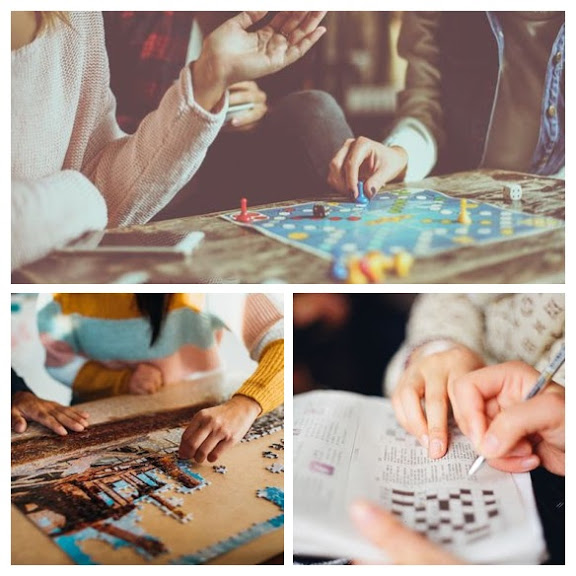
Brain Power As You Age

I love the idea of living a long life, but it has to be with a good degree of health and fitness and an active brain. Now, unless I have a fairy godmother, that I know nothing about the only way this is going to happen is with a fair amount of effort on my part. I have been amazed at all the incredible folk in their eighties, nineties and even over a hundred like the inspirational Sir Tom, who have appearing recently up on various TV programmes. These are the generations that have survived war-time, recessions, national strikes and quite a few ups and downs, but their strength, resilience and good humour still shows through.

Now we know that our brain’s volume gradually shrinks as you get older. When this occurs, some of the nerve cells in your brain can shrink or lose connections with other nerve cells. Blood flow within your brain also slows as you age. These age-related changes are thought to be behind the differences in cognitive function many people notice as they age. However, myths about ageing can contribute to a failing memory. Middle-aged and older learners do worse on memory tasks when they’re exposed to negative stereotypes about an ageing memory and better when given positive messages about memory preservation into old age. Therefore, if you believe you can improve your brainpower and put this into practice, you have a much better chance of keeping your mind sharp. My seventy-six-year-old mother has just starting learning Spanish on Duolingo and after 3 days was at the top of the leader board, so age is no obstacle to learning a new skill.

A higher level of education is associated with better mental functioning in old age. Experts think that advanced education may help keep memory strong by getting a person into the habit of being and staying mentally active. Challenging your brain with mental exercise is believed to activate processes that help maintain individual brain cells and stimulate communication among them. Work can keep us mentally active and when you retire pursuing a hobby or learning a new skill can help maintain brain power. The belief that exercising our brains through mentally stimulating activities like puzzles, makes a lot of sense, if we want our brain to stay in peak condition, we should always use it. Other activities like; reading, playing chess or bridge, writing, learning a language, art and music not only stimulate the brain but keep life interesting and worthwhile. My neighbour who is in her late nineties plays bridge daily and is as bright and alert as she was decades ago.

My family throughout the lock-down has had a weekly quiz night on Zoom which we all love and hopefully will continue. Jigsaws and board games have been taken out of the loft and families across the country have been playing these together. If we all kept doing this and not spending hours on social media and mindless gaming, we would notice the difference.

Studies of cognitive ageing often ask people in older age to complete tests of their thinking skills and provide details about activities they do. Almost all of those studies find that the people who carry out much more stimulating mental activities have better thinking skills in older age.

There has been a growing market for so-called brain- training products. These are often computer-based games or tasks specifically designed to be mentally stimulating. These products are popular but there is controversy over whether brain- training really does protect thinking skills in later life. A group of leading research experts has argued that evidence that brain training can help combat cognitive decline as we grow older is limited. Their view was that people who play these games get better at them but might not see improvements in their thinking skills more broadly. One of the biggest companies selling these products was fined in 2016, by the US government Federal Trade Commission for making claims that weren’t supported by evidence and that in the Commission’s words;

Preyed on consumers fears about age-related cognitive decline.

Personality I think that although the evidence on the benefits is still incomplete, there are many great reasons for taking up new activities in later life. Doing hobbies and activities that we enjoy are important to maintaining a good quality of life and well-being in older age. I would mention that you don’t necessarily need to spend a lot of money, the internet provides free quizzes etc and you may be able to join classes at a reduced rate or even for free. Mixing with a younger age group is important and staying engaged and interested in the world around you can help to keep your minds sharp. I have been learning three languages online. It’s challenging at times but also rewarding, great fun and free.

There is promising research that indicates that taking the following steps may help preserve your memory and thinking skills as you age: controlling cholesterol and blood pressure, not smoking or drinking excessively, exercising regularly, eating a healthy diet, getting a good education, stimulating your brain, socializing and staying active in old age.

A new study suggests that in fact, older people who were physically active kept their minds sharper as well as having better health. I thing all these steps are achievable for us all. Now I am middle-aged, I realise just how important it is to be healthy both physically and mentally. No amount of success or wealth matters if we are not in good health and cannot still do tasks or have the ability to think.

So just by making some simple changes now can affect the quality of life in your later years….